Facebook Is Letting You Talk to Its Algorithm Now
Meta is bringing Instagram's "Your Algorithm" controls to Facebook and leaning on large language models to figure out what you actually mean.
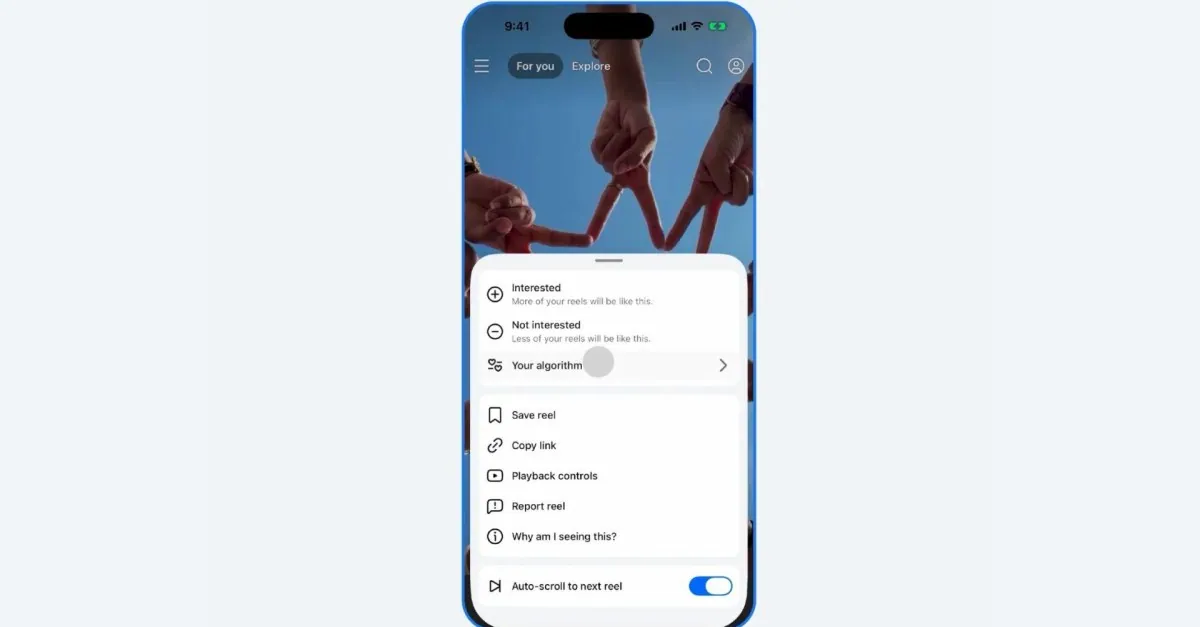
Meta is rolling out a new Facebook feature called "Your Algorithm" that lets users directly steer what shows up in their feed and in Reels, rather than just hoping the ranking system eventually figures out their taste. The idea: tell Facebook what you're interested in, or not interested in, and watch your recommendations shift in real time.
The mechanics are straightforward. Users can open Your Algorithm directly, or tap the three-dot menu on any individual post and hit "interested" or "not interested." Those same buttons may also show up right underneath posts in the feed. Meta says the system "may ask follow up questions for more detail on what you liked or disliked," and that you can respond in plain language rather than picking from a preset list of categories.
That natural-language piece is the real shift here. Meta says it's leaning more heavily on large language models, or LLMs, in its content-ranking systems. The pitch is that an LLM can parse the nuance in how someone phrases a preference, not just log a thumbs up or down. In Meta's own words, the goal is "an algorithm you can actually talk to," one where "your recommendations respond in real time, adapting within the same session to reflect what matters to you right now."
In practice, that means the system is supposed to update quickly, not after some batch process runs overnight. Meta describes the response as immediate, adjusting your feed within the same browsing session based on what you've just told it.
Not exactly new territory for Meta
If this setup sounds familiar, it's because Meta already built it once. Your Algorithm launched on Instagram earlier this year, and Threads has its own version called "Dear Algo." Facebook is effectively the third app in the family to get this kind of direct, conversational control over its ranking system, and it's part of what Meta is framing as a broader push of "AI-powered" tools for personalizing what people see across its platforms.
That pattern is worth noting on its own. Meta tends to test features on Instagram or Threads first, then bring the ones that stick to Facebook, which remains its largest user base even as it's lost some cultural relevance to its sister apps. Rolling this out to Facebook last suggests Meta is treating it as validated enough to scale.
Why this matters beyond the feature itself
Algorithmic feeds have been the subject of years of criticism and congressional hand-wringing over how little control users have over them. Giving people an explicit, conversational dial to turn is Meta's answer to that pressure, at least on paper. Whether it meaningfully changes what people see, or just gives them the feeling of control while the underlying ranking system keeps optimizing for engagement, is the open question Meta hasn't addressed.
There's also a quieter story here about where LLMs are heading inside Meta's products. Content ranking has traditionally run on more narrow machine-learning models trained to predict engagement, not on the kind of generative AI people associate with chatbots. Using LLMs to interpret open-ended feedback, like a sentence explaining why someone's tired of seeing a certain kind of post, is a different application of that technology, and one that could spread to other parts of Meta's ranking stack if it works as advertised.
For now, the feature is arriving on Facebook. Whether it actually changes how satisfying people find their feed, or just adds one more settings menu nobody visits, will depend on how well Meta's LLMs interpret what people type in.


