Musk's 5 Million Car Pledge Collides With Tesla's Two-Year Sales Slide
Tesla's CEO is betting the company's growth on robotaxis and factories it doesn't have, while deliveries have fallen for two straight years.
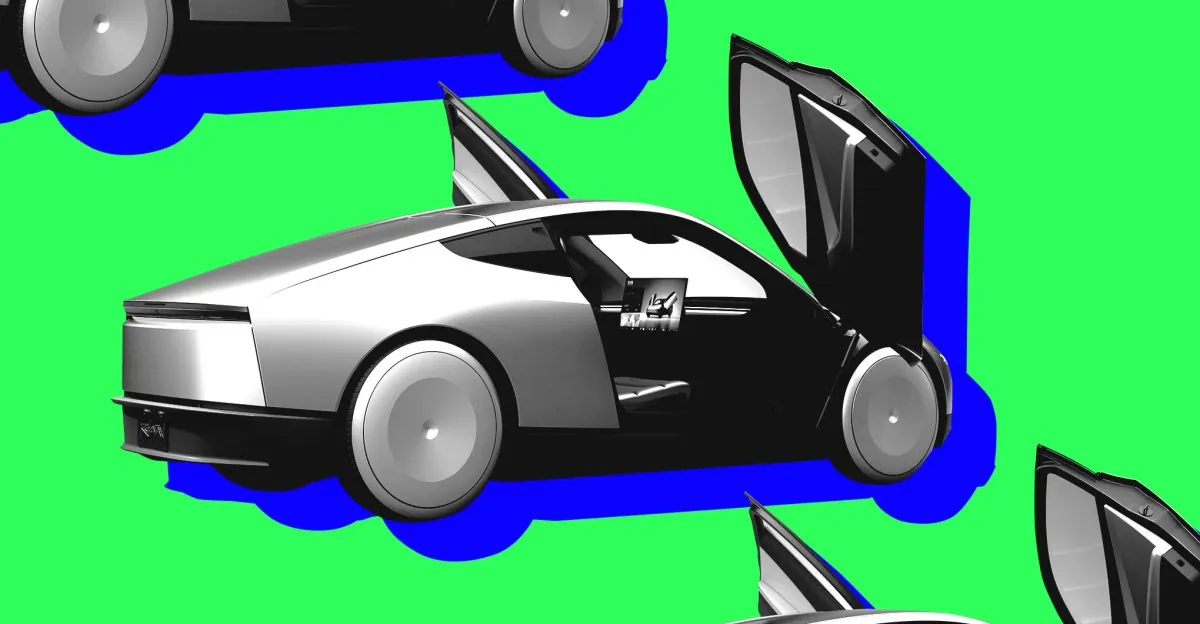
Elon Musk told investors on Tesla's earnings call this week that the company is aiming to deliver 5 million vehicles a year by around 2030. "We were aiming for 5 million vehicles a year by approximately 2030," he said, adding that he thinks Tesla has "a good shot of achieving that goal."
It's a big number. It's also, according to a report from The Verge, a much smaller number than the one Musk floated in 2020, when he said Tesla would be selling 20 million cars annually by 2030. The new target is a quiet downgrade dressed up as ambition, and the math behind it doesn't look kind to him either way.
Start with where Tesla actually is. The company's annual deliveries peaked in 2023 at roughly 1.81 million vehicles, then fell in 2024, and fell again in 2025 to about 1.64 million, per the figures cited in the report. That's two consecutive years of decline, the first time Tesla has ever slid backward like this. Through the first three quarters of this year, Tesla has delivered 1,324,681 vehicles, meaning it needs about 311,448 more in the fourth quarter just to avoid a third straight annual drop. Given Tesla's habit of discounting hard at year's end to clear inventory, that's probably within reach, and analysts are reportedly projecting the company could finish 2026 around 1.82 million vehicles, a new high.
Even so, getting from "best year yet" territory near 1.8 million to Musk's stated 5 million target by 2030 requires a compound annual growth rate — the steady year-over-year percentage increase needed to hit a long-term goal — of about 25 percent every single year, calculated off the 2025 base of 1.64 million deliveries. For context, Tesla hasn't posted growth anywhere close to that since 2023, and it's currently moving in the opposite direction.
The product lineup problem
Part of the issue is what Tesla actually has to sell. More than 96 percent of its deliveries come from just two vehicles, the Model 3 and Model Y, according to the report. The Model S and Model X were discontinued this year to free up production space at the Fremont plant, reportedly for Tesla's humanoid robot. The Cybertruck has badly undershot its original sales targets. And the Roadster, while a flashy halo product, was dismissed by Musk himself as "small potato" — a project that won't move the financial needle.
That leaves two vehicles that could theoretically carry the growth story: the Semi and the Cybercab. The Semi, now ramping up at Tesla's Nevada factory, gives the company a real shot at selling heavy electric trucks to commercial fleets, which could meaningfully expand volume beyond individual car buyers. But based on Musk's own comments, he's pinning Tesla's future growth primarily on the Cybercab, the steering-wheel-less, pedal-less robotaxi.
That's where things get shakier. Tesla's VP for Autonomy, Ashok Elluswamy, said on the earnings call that the company intends to launch unsupervised Full Self-Driving in the second quarter of 2027. VP for Vehicle Engineering Lars Moravy said Tesla hopes to deliver its first Cybercabs — likely to fleet operators rather than individual buyers — before the end of this year. If that timeline holds and fleets start buying Cybercabs at scale, the logic goes, Tesla opens up an entirely new sales channel that doesn't depend on convincing individual car shoppers.
Regulation doesn't move at Tesla's pace
The problem is that driverless cars can't just show up and start working commercially. Governments have to approve them, market by market, and that process is slow and inconsistent across states and countries. Tesla, notably, isn't the industry's smoothest operator when it comes to winning regulators over — federal regulators are already examining whether the company sidestepped rules in its Cybercab rollout in Austin, according to the report. If approvals stall, or if the technology isn't reliable enough everywhere Tesla wants to operate, fleet operators won't buy Cybercabs in the volumes Musk needs. That leaves Tesla back where it started: selling conventional EVs to individual buyers, in a market where it no longer has a cheap option.
That gap matters because Musk shelved plans for a $25,000 mass-market EV, sometimes referred to as the "Model 2," to focus on the Cybercab instead. While Tesla chased robotaxis, competitors didn't wait. Chinese automakers including BYD, Geely, and Xiaomi have been chipping away at Tesla's market share in Europe and Asia with affordable models Tesla simply doesn't have an answer for.
Then there's the physical capacity problem. Tesla's existing factories can produce somewhere between 2.5 and 3 million vehicles annually, according to the report. Hitting 5 million would mean roughly doubling that footprint, which could mean building as many as three new Gigafactories. That's not a quick fix. It means years of construction, new supply chains, and a major expansion of battery production capacity, all before a single additional car rolls off the line.
Musk has built Tesla's reputation partly on pulling off things that looked impossible on paper. But this particular target stacks several unresolved bets on top of each other: a robotaxi business that still needs regulatory approval it doesn't have, a product lineup missing the affordable model that could drive real volume, and a manufacturing footprint that would need to roughly double in four years. Any one of those alone would be a stretch. Together, they're the gap between a bold number on an earnings call and an actual plan to get there.


