Elon Musk Says Grok Will Finish an AI-Made 'Odyssey' Movie by End of 2026
The claim lands amid Musk's ongoing feud with Christopher Nolan's blockbuster adaptation, which he's criticized as insufficiently faithful to Homer.
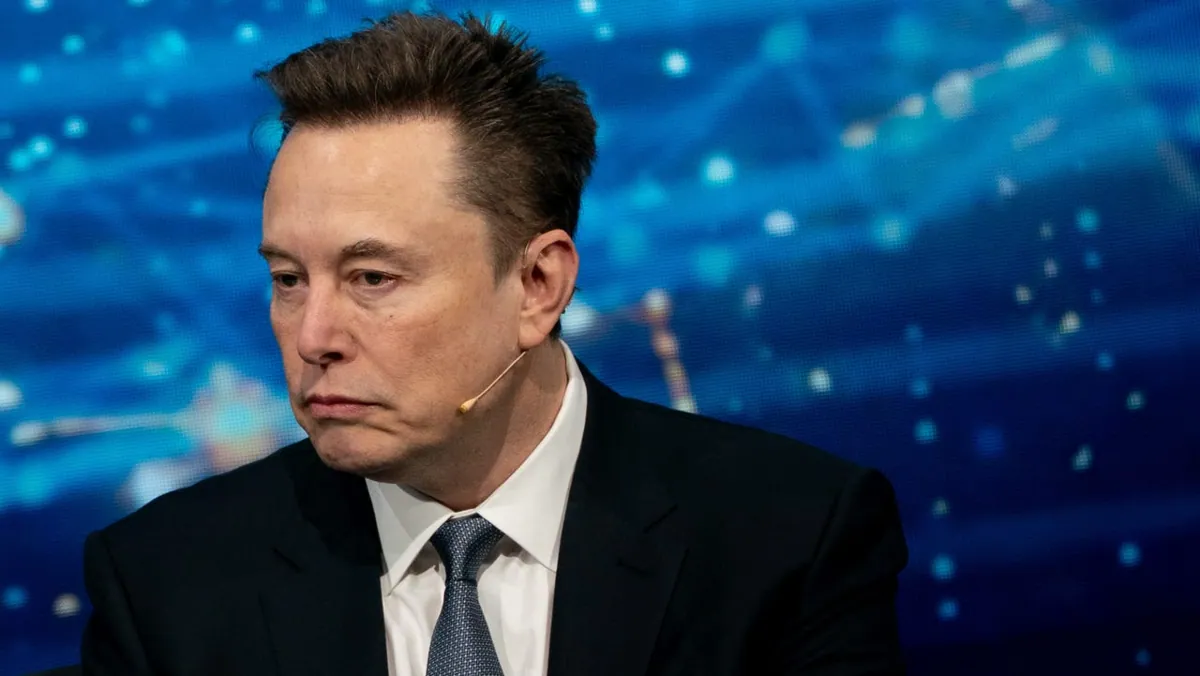
Elon Musk says Grok will produce a complete AI-generated film version of The Odyssey before 2026 is over, and he's promising it will be "historically accurate and true to the art of Homer." He offered no assurances about whether it would actually be watchable.
Musk made the prediction while retweeting a three-minute AI-generated video based on the epic. "Before this year ends, Grok Imagine will make a full-length movie of The Odyssey that is historically accurate and true to the art of Homer," he wrote on X.
The timing isn't random. Musk has spent months publicly sparring with Christopher Nolan's big-screen adaptation of The Odyssey, and this latest claim reads as a direct shot across its bow. Much of that earlier criticism came from conservative corners of the internet, which objected to Nolan's casting: transgender actor Elliot Page as Sinon, rapper Travis Scott as the Bard, and Lupita Nyong'o playing both Helen of Troy and her sister Clytemnestra. Critics labeled the choices "woke" ahead of the film's release.
Nyong'o addressed the backlash directly back in May. "This is a mythological story," she said. "I'm very supportive of Chris' intention with it and with the version of this story that he is telling. Our cast is representative of the world. I'm not spending my time thinking of a defense. The criticism will exist whether I engage with it or not." She added that the sprawling, mythic scale of the story is exactly why the cast looks the way it does: "We're occupying the epic narrative of our time."
Notably, the AI-generated clip Musk boosted appears to depict an all-white cast, suggesting that's his idea of historical fidelity to Homer. British accents, at least, seem to pass muster in his version.
The actual scholars aren't fussed about casting
Here's the twist: the people who actually study Homer for a living have largely shrugged off the casting debate that fueled so much online outrage. Their objections to Nolan's film, where they exist, are aimed elsewhere — at specific character and plot changes Nolan made, not skin color or gender identity.
Professor Daniel Mendelsohn, who published his own translation of the poem last year, mocked the entire online controversy at the UK's Hay Festival in May. According to a report in The Telegraph, Mendelsohn said he found it funny to see "all of these bros suddenly worrying about Greek literature," pointing out that Helen barely appears in the actual poem. "So the debate is particularly silly," he said.
The film also drew criticism during its run-up for its armor design and for having characters speak in contemporary dialogue with largely modern American accents — stylistic choices separate from the casting fight entirely.
Nolan's film isn't exactly struggling
Whatever online noise has surrounded it, Nolan's Odyssey is thriving. It opened to $264.064 million worldwide, split between $124.5 million domestically and $139.564 million internationally. That's the biggest opening weekend of Nolan's career, eclipsing The Dark Knight Rises ($249 million) and The Dark Knight ($198 million).
Critical reception has been strong too: a 94% score on Rotten Tomatoes' Tomatometer and a 97% audience Popcornmeter rating. IGN's own review gave the film an 8/10, praising its "sense of horror and existential angst" alongside moments of humor, calling it "a pretty great moviegoing experience" even if not flawless.
AI's Odyssey moment
Musk's Grok claim isn't the only AI take on Homer's poem circulating right now. Director Ash Koosha recently released a teaser for Odysseus: The Fall, a separate Odyssey adaptation made entirely with AI tools.
Nolan, for his part, has made clear he isn't a believer in the technology. Speaking to AFP in Paris, he noted the disconnect between AI's embrace by Wall Street and the tech industry and its reception among ordinary audiences. "The interesting thing with AI is I've never seen a technology that's been so successfully adopted by Wall Street and by investors and by tech companies that the public has so thoroughly rejected," he said. "It's just sort of an odd thing. Young people in particular, they coined this term 'AI slop.' There's a sort of disdain for things AI."
Whether Grok Imagine can deliver a full-length film that changes that perception, on any kind of deadline, remains to be seen. For now, Musk's promise is just that: a promise, with 2026 as the clock running out on it.


