DeepSeek Raises $15 Billion Just Days After US Agencies Were Ordered to Drop It
The Hangzhou AI lab's reported funding round, backed by CATL and Tencent, lands right as federal civilian agencies move to strip its technology out of their systems.
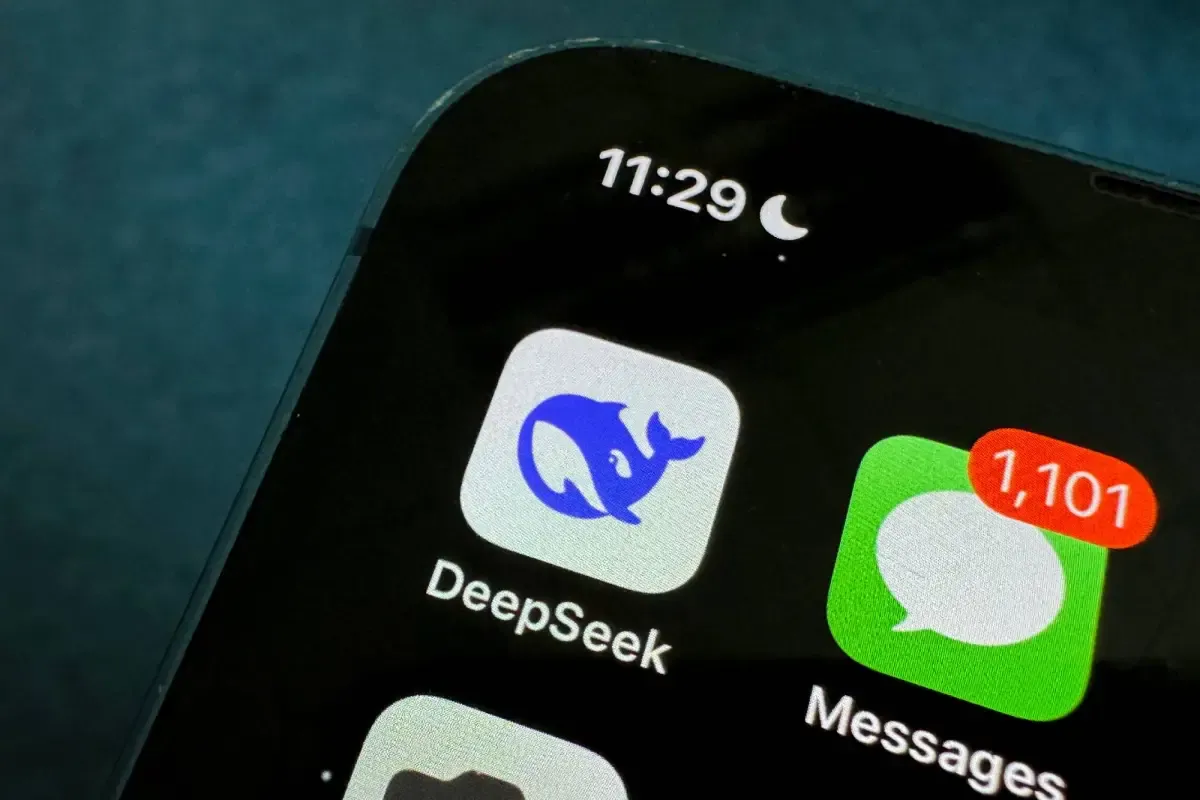
DeepSeek has reportedly raised around $15 billion, or roughly 100 billion yuan, in one of the largest funding rounds in China's history, according to Bloomberg. The timing is hard to ignore: it comes just two days after the U.S. ordered federal civilian agencies to remove DeepSeek's AI technology from their systems over security concerns.
Potential investors in the round include CATL, the Chinese battery giant, and Tencent, the company behind WeChat, Bloomberg reported.
The new raise builds on a rapid run of fundraising for the company. DeepSeek pulled in more than $7 billion in June at a $50 billion valuation. By July, it was reportedly seeking another $1.5 billion at a valuation near $71 billion, with an eye toward a potential IPO in China as early as next year. If this latest round closes as reported, DeepSeek's valuation and war chest will have grown dramatically in the span of just a few months.
According to the report, the Hangzhou-based startup is pouring the new capital into AI infrastructure and open models aimed at both domestic and international markets, even as U.S. restrictions narrow its access to American customers and institutions. That expansion is also likely to sharpen competition with DeepSeek's domestic rivals, who are themselves flush with fresh capital.
A Chinese AI funding boom, restrictions or not
DeepSeek's round is the latest and largest entry in a broader wave of investment hitting Chinese AI companies this year. Moonshot AI, maker of the Kimi assistant, raised $2 billion in May at a $20 billion valuation. Manus AI brought in more than $500 million earlier this month. And two other Chinese AI firms, Zhipu AI (also known as Z.ai) and MiniMax, went public in Hong Kong in January; as of today, they carry market capitalizations of roughly $29 billion and $7.2 billion, respectively.
Taken together, it's a clear signal that investors, both inside and outside China, are willing to commit serious money to Chinese AI labs even as geopolitical friction with the U.S. intensifies. The DeepSeek round in particular suggests that government-level restrictions aren't slowing the flow of private capital, at least not yet.
DeepSeek itself has been at the center of the U.S.-China AI rivalry since early 2025, when its free, open-weight R1 reasoning model caught much of the American AI industry off guard and showed that Chinese labs could compete directly with U.S. firms on frontier capability. That moment put DeepSeek on the radar of U.S. policymakers, culminating in this week's directive pulling its technology from federal civilian systems.
Who's behind it
DeepSeek was founded in 2023 by Liang Wenfeng, who also co-founded the quantitative hedge fund High-Flyer, which helped bankroll the AI lab in its early days. Corporate ownership data analyzed by WireScreen shows Liang still held an estimated 81.6% stake in DeepSeek's Chinese operating entity following the company's previous funding round, meaning he retains tight control even as outside capital pours in.
DeepSeek did not respond to TechCrunch's request for comment on the new round.
Whether this $15 billion raise actually closes on the terms reported, and what valuation it implies, remains to be seen. But the timing alone tells its own story: Washington is trying to wall DeepSeek off from U.S. government systems, while investors closer to home are betting bigger on the company than ever.


