The $23 Billion Question: Who Really Pays When AI Needs More Power?
A regulatory system built for a simpler grid is straining to fairly divide the cost of feeding data centers' surging appetite for electricity — and everyday ratepayers may have the weakest voice in the room.
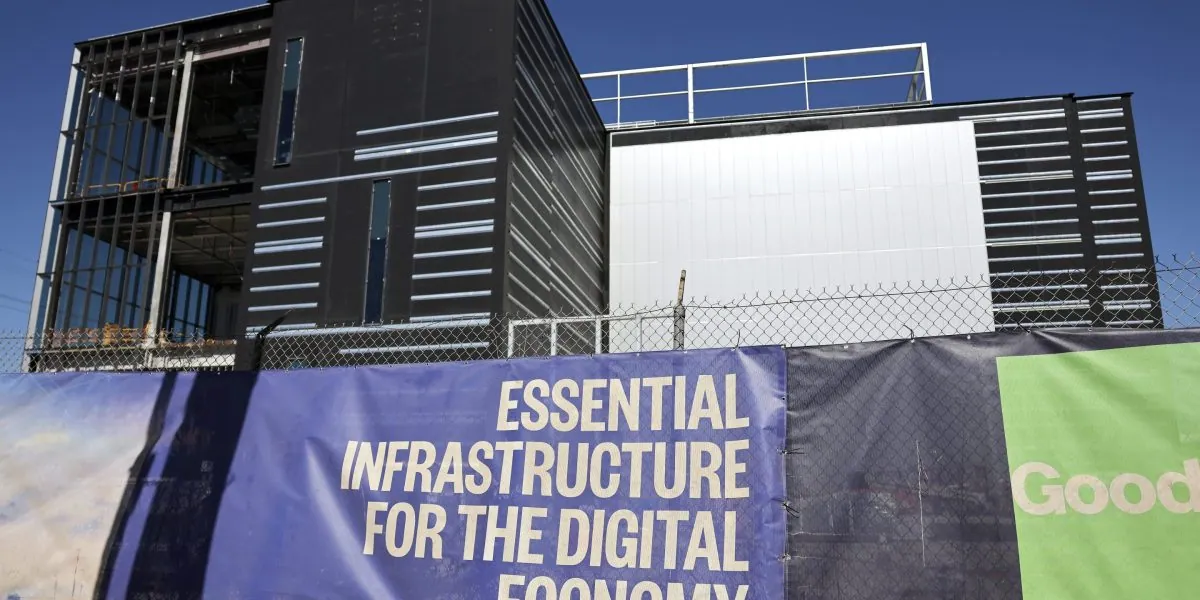
Data centers have already added $23 billion in customer electricity price increases across a huge swath of the United States, and that number is expected to hold through at least the end of 2028. The figure comes from a recent report by the organization that monitors PJM, the regional power market covering all or part of 14 states stretching from the mid-Atlantic to the Midwest. The report identifies data center demand as a primary driver of those hikes, according to Fortune's reporting on the analysis.
That's a striking number on its own. What makes it more unsettling is how murky the process is for deciding who actually foots the bill.
Big tech companies have generally said they're willing to pay their fair share of the costs tied to generating and delivering the extra power their data centers require. The problem is that "fair share" isn't a number anyone can just look up. It's the output of a regulatory process that's technical, slow-moving, and largely invisible to the households whose bills are on the line.
How electricity prices actually get set
Setting a price for power sounds simple: figure out what it costs to deliver electricity, split that cost among customers, and charge accordingly. In practice, it's a massive accounting exercise. State utility commissions start by identifying everything a utility spends money on — power plants, transmission lines, substations, salaries, fuel, spare parts, electricity bought from other providers. Then analysts work through that list, often thousands of line items, and decide how to divide each cost among categories of customers: residential, commercial, industrial.
The guiding principle is that costs should land on whoever caused them. Sometimes that's easy. If a new data center needs a short stretch of power line run from a nearby substation, the data center pays for that line — nobody disputes it.
But most real-world costs aren't that clean. If a utility has to upgrade a substation or line up new sources of electricity to handle a data center's growing needs, that investment often becomes part of the shared grid everyone relies on. Those costs get spread across the whole customer base, whether or not you personally benefit from the data center down the road.
A flexibility loophole
One of the more technical wrinkles in this system involves something called coincident peak demand — the amount of electricity a customer group uses at the exact moment overall system demand is highest. Costs tied to that peak usage are typically divided proportionally among whoever is drawing power at that moment.
Here's the catch: data centers can be far more nimble than a household when it comes to managing consumption. Computerized systems can ramp workloads up or down automatically, minute to minute. A homeowner trying to do the same thing would have to physically run around unplugging appliances, or buy specialized equipment to automate it.
That flexibility means data centers can potentially anticipate when the grid-wide peak is coming and dial back their own usage right at that moment, sidestepping the costs allocated based on peak contribution even though they're consuming enormous amounts of power the rest of the time. This isn't hypothetical: something similar has already played out with cryptocurrency mining operations in Texas, which have adjusted usage patterns to avoid peak-related costs.
Who's actually arguing for you
When state commissions decide how to divide these costs, they gather proposals from interested parties. Utilities submit their own plan. Large industrial customers, retail groups, and data center operators — who can afford to hire specialized cost-allocation experts — all submit competing proposals designed to protect their own interests. Some states even have dedicated offices representing specific commercial groups, like Pennsylvania's Office of Small Business Advocate.
Residential customers are the notable gap. Every state except Georgia, Idaho, and Louisiana has a consumer advocate office meant to represent household interests before regulators. But according to Theodore J. Kury, Director of Energy Studies at the University of Florida and author of the underlying analysis, these offices are often legally required to represent all customers neutrally — meaning they can't push for outcomes that shift costs from one customer group onto another.
That creates an odd imbalance: a state's consumer advocate wants overall utility costs kept low, but may be barred from taking a side on how those costs get divided up. So when a data center's well-resourced experts argue that minimal costs should be allocated to their industry, there may be no one in the room formally pushing back on behalf of ordinary ratepayers.
The long-term risk
There's a further wrinkle that compounds the uncertainty. Utility infrastructure investments are built to last for decades, but not every planned data center actually gets built, and some end up using far less power than projected. Technology shifts fast enough that a data center could become obsolete after just a year or two of operation. If a utility has already sunk money into grid upgrades meant to serve a facility that never materializes or shuts down early, those costs don't just disappear — they get spread across everyone else's bills.
The picture gets messier still for municipal utilities run by city councils and cooperative utilities overseen by elected boards in rural areas. Many of these smaller organizations lack full-time regulatory or utility experts on staff, yet they face the same complex allocation decisions as large state commissions, sometimes having to hire outside consultants just to keep up.
Kury's conclusion, drawn from his research into how states have handled the demands of large electricity customers, is that residential ratepayers need to actively engage with a process that's easy to ignore until the bill arrives. Submitting public comments and showing up to open hearings may be the only way household interests get represented at all, since the formal advocacy structure wasn't built with this fight in mind.
The $23 billion increase already logged in the PJM region is a preview, not a conclusion. As data center construction accelerates nationwide, the fight over who pays for the grid upgrades that come with it is only getting started — and right now, the side with the least formal representation is the one paying the bill every month.


