Alibaba Bars Staff From Anthropic's AI, Escalating a Distillation Fight
The ban, set to take effect July 10, follows Anthropic's accusation that Alibaba ran the largest known attempt to copy its AI models, and comes as other Chinese tech firms face scrutiny over workarounds to access Claude.
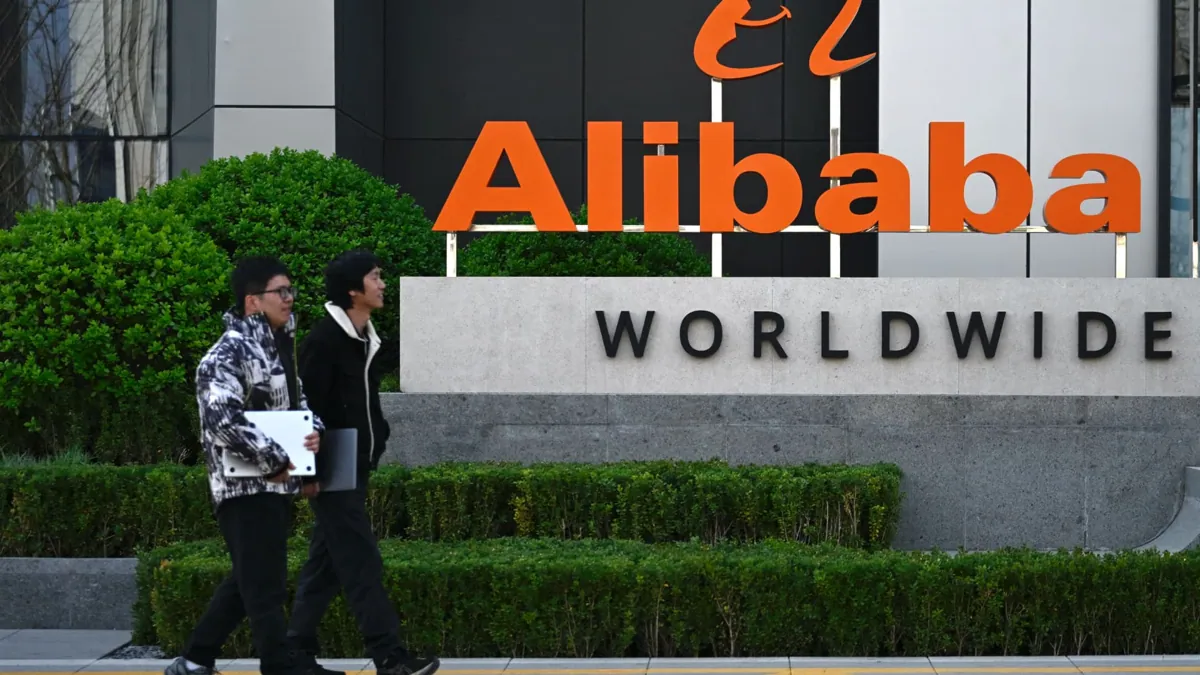
Alibaba is telling its employees to stop using Anthropic's AI tools for work, starting July 10, according to CNBC, which cited people familiar with the matter. The company has classified Anthropic's Claude Code as high-risk software internally, and workers are being told to uninstall all Anthropic models and agent products in favor of Alibaba's own AI assistant, Qoder.
The trigger goes back to June, when Anthropic sent a letter to the U.S. Senate Committee on Banking, Housing, and Urban Affairs accusing Alibaba of running what it called "the largest known distillation attack" against it, describing the effort as "brazen" and "illicit." Distillation, in AI terms, is a technique where one company trains a smaller or cheaper model by having it learn from the outputs of a more advanced one, effectively siphoning off capabilities without doing the expensive original research. Anthropic's complaint to Congress framed Alibaba's alleged conduct as exactly that kind of extraction, at a scale it said it hadn't seen before.
Anthropic's own terms of service already prohibit companies based in China and other countries it labels "adversarial nations" from using its models. That policy has made Anthropic something of a flashpoint in the broader argument over how tightly American AI companies should wall off their technology from Chinese firms, especially as Beijing and Washington both treat frontier AI as a strategic asset.
Alibaba and Anthropic have both declined to comment on the ban, so the full internal reasoning inside Alibaba, and any response Anthropic may have communicated privately, remains unclear. But the timing lines up cleanly with the fallout from Anthropic's Senate letter, and with a broader backlash against the company that's been building online in China.
Backlash and hidden detection code
Part of that backlash stems from posts on Reddit and GitHub that surfaced what users described as hidden code within Anthropic's tools designed to detect whether someone might be accessing the models from within China. For a company that officially bars Chinese access altogether, embedding detection mechanisms is a logical enforcement step, but it's also the kind of discovery that tends to inflame exactly the "back-door security risk" concerns Alibaba is now citing publicly as its rationale for the ban.
That framing matters. Alibaba isn't simply saying it doesn't want to use a rival's product, it's characterizing Anthropic's own software as a security threat to its operations, a more pointed accusation than a typical corporate boycott.
The access workarounds Anthropic is trying to shut down
The ban also lands just days after a Financial Times report, cited by CNBC, that Anthropic is moving to close loopholes that have let Chinese companies reach Claude indirectly, through entities based in other countries.
According to the FT's sourcing, Chinese fintech group Ant had been giving employees corporate Claude accounts accessible through the company's intranet, which connects to its Singapore-based entity, effectively routing around the China restriction through a foreign subsidiary. Ant declined to comment on the report.
TikTok parent ByteDance presents a different case. The FT reported that ByteDance does not provide direct access to Claude, but the company did roll out a reimbursement program in April letting engineers expense personal Claude subscriptions, which they can then access using VPNs. A person familiar with the policy told CNBC it was designed to let staff "experience and learn" about a wider range of AI tools to build their skills. ByteDance also declined to comment on the FT's reporting.
Taken together, the picture is of a restriction that's proven leaky in practice, chipped away at company-by-company through subsidiary accounts, expense programs, and VPN access, even as the company itself layers in technical measures to detect and block China-based use.
Why this matters beyond one corporate memo
The dispute sits at the intersection of two things Washington and Beijing both care about a great deal: who controls the most capable AI models, and how much of that capability can leak, legally or otherwise, across borders. Anthropic's distillation accusation is essentially a claim that Alibaba tried to shortcut years of AI research by learning from Claude's outputs rather than building comparable capability from scratch. Alibaba's ban, framed around security rather than the distillation allegation itself, sidesteps that accusation publicly while still delivering a clear response, cutting Anthropic out of its own operations entirely.
For Anthropic, the episode underscores the difficulty of enforcing a hard geographic line around access to frontier AI when the tools themselves are cloud-based and easy to reach through intermediaries, VPNs, or foreign subsidiaries. Closing those gaps, as the company is reportedly now attempting, will likely keep surfacing more of these friction points with major Chinese tech firms as it goes.


