China's AI Labs Just Released Two Models That Claim to Rival GPT and Claude — For Free
Moonshot AI and Alibaba both unveiled frontier-class models within days of each other, and both plan to give away the underlying weights.
Two of China's biggest AI companies just made a coordinated case that the gap between American and Chinese artificial intelligence has nearly closed. Within a few days of each other, Moonshot AI and Alibaba released new models that, by their own testing, sit right behind the best systems OpenAI and Anthropic have to offer. And unlike their American rivals, both companies are planning to hand the technology over for free.
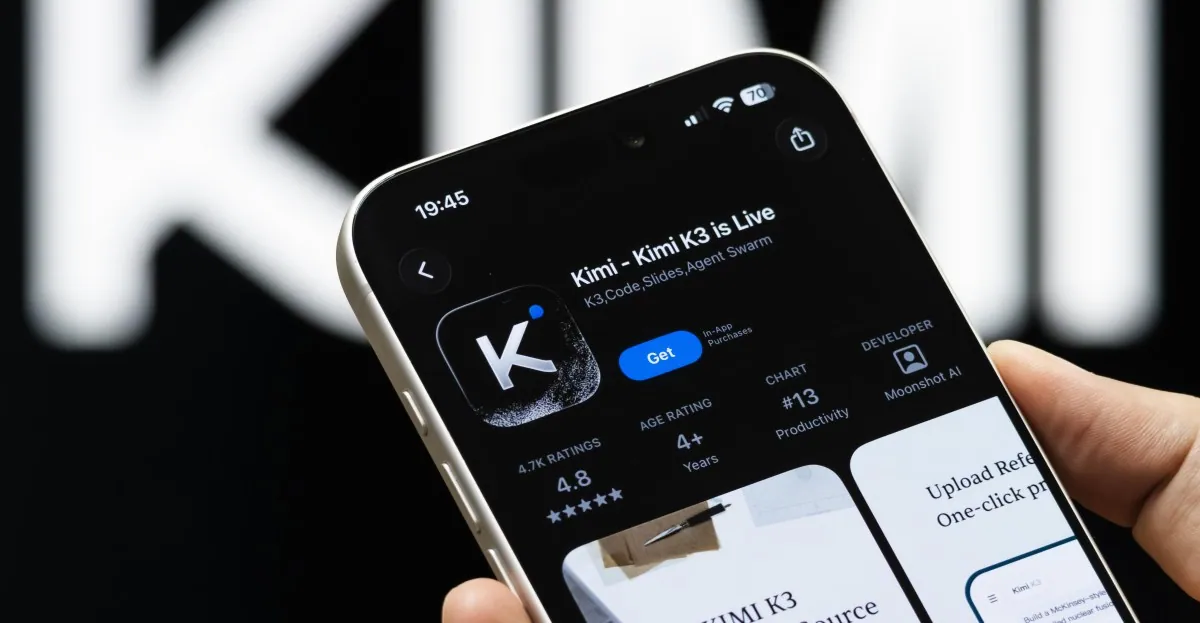
Moonshot AI, a Beijing-based developer that's become one of China's leading model builders, went first. On Friday, it unveiled Kimi K3, which the company says outperforms nearly every American system it tested against, falling short only of OpenAI's GPT-5.6 Sol and Anthropic's Claude Fable 5. On some benchmarks, Moonshot claims Kimi K3 actually came out on top.
Alibaba followed over the weekend with a preview of Qwen3.8, describing it as one of the most powerful models available today and, in its own words, "second only to Fable 5" — Anthropic's flagship.
Neither company's claims have been independently verified yet, and self-reported benchmarks always deserve some skepticism. But the timing and substance of these announcements matter regardless of how the numbers eventually shake out.
Bigger, and given away for free
What sets these releases apart from most of what comes out of OpenAI or Anthropic is the plan to actually distribute the models rather than keep them locked behind an API. Moonshot is calling Kimi K3 the largest open-source AI system in the world, built with 2.8 trillion parameters. Alibaba puts Qwen3.8 at 2.4 trillion parameters and describes it as "continuously evolving."
Parameter count is a rough proxy for how complex and capable a model is, though a bigger number doesn't automatically mean a better model. Notably, neither OpenAI nor Anthropic discloses exact parameter counts for their top systems, which makes direct comparisons tricky even before you factor in differing benchmarks and testing methods.
The full picture isn't available yet. Moonshot says it will release the complete model weights — the trained numerical values that actually encode what a model has learned — on July 27th, a week out from the announcement. Alibaba has only said Qwen3.8 is "going open-weight soon," without a firm date. Until those weights are public and outside researchers can put the models through independent testing, claims about how they truly stack up against GPT-5.6 Sol or Claude Fable 5 remain just that: claims.
Openness itself has become a competitive strategy for Chinese AI developers. While a few US companies, Meta chief among them, have released models that developers can freely download and modify, the dominant approach among American frontier labs is to keep the most advanced systems proprietary and accessible only through paid APIs. Chinese firms have increasingly leaned the opposite direction, turning "give it away" into a point of pride and a recruiting pitch to the global developer community.
Why this feels familiar
If this all sounds like a rerun, that's because it is, in a sense. The last time a Chinese lab dropped a low-cost, high-performing model into the open, it rattled the entire industry — that was DeepSeek, whose release last year forced a serious reassessment of how far ahead American AI companies actually were. Kimi K3 and Qwen3.8 look like a sequel to that moment, except this time it's two companies moving almost simultaneously rather than one.
The stakes go well beyond bragging rights on a leaderboard. AI has become tangled up with national security, economic competitiveness, and geopolitical leverage in a way that makes every capability gain a matter of state interest, not just business strategy. American companies have poured enormous sums into chips, data centers, and training runs on the assumption that scale and capital translate into a durable lead. If Chinese labs can approach the frontier while spending less, that assumption gets a lot shakier.
It also puts an odd spotlight on Washington's own approach. The US government has used export controls to choke off China's access to the most advanced chips, and it reportedly pressured Anthropic to pull its most capable model from certain markets over fears it could help Chinese competitors catch up. Yet even facing those restrictions, Chinese labs are the ones opening their models up to the world, while the leading US labs keep theirs closed.
Whether Kimi K3 and Qwen3.8 actually deliver on their makers' claims will become clearer once the weights are out and researchers can run their own tests. But the pattern is hard to miss: another set of Chinese releases arriving fast, claiming near-parity with the best American systems, and doing it in public. Regardless of exactly where these two models land on the leaderboard, they're one more data point suggesting that America's lead at the frontier is considerably thinner than it looked even a year ago.


