OpenAI Rebuilds ChatGPT's Voice Mode to Listen, Not Just Talk
The new GPT-Live-1 model can speak and listen simultaneously, letting it stay quiet on command, translate in real time, and pull in ChatGPT's smartest text models mid-conversation.
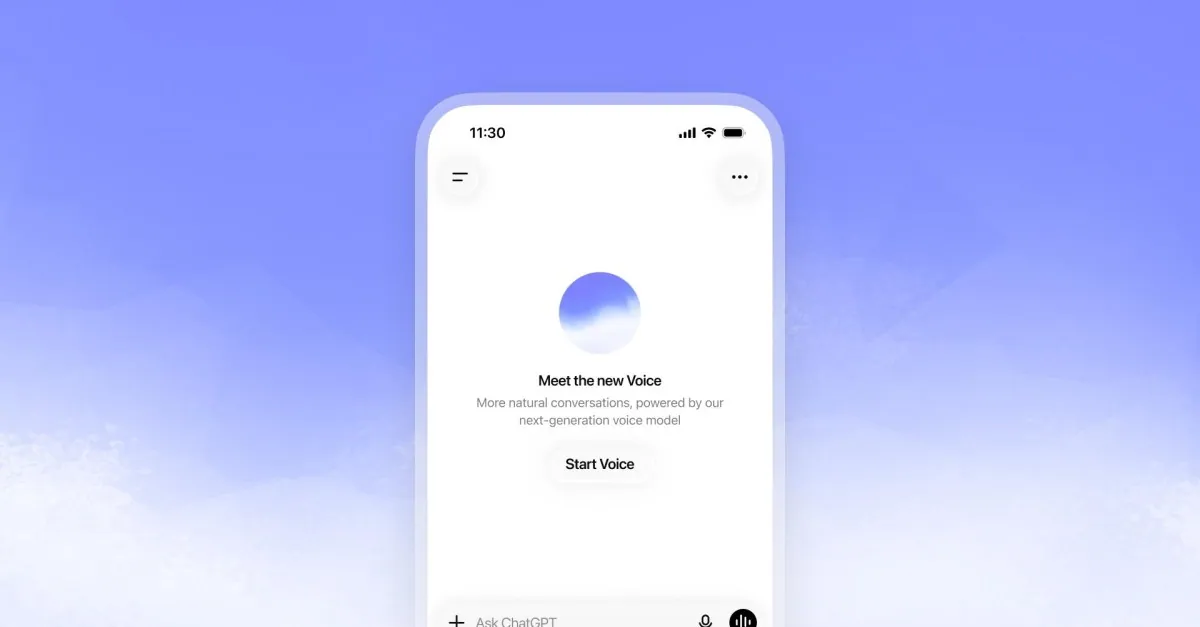
OpenAI is replacing the brains behind ChatGPT's voice mode with a model built to act less like a chatbot taking turns and more like a person having a conversation. The new system, called GPT-Live-1, is designed to interrupt users less often and to actually wait through a pause instead of barreling ahead, according to OpenAI.
During a press briefing, OpenAI research lead Kundan Kumar described GPT-Live-1 as the company's "smartest voice model" yet. Part of that intelligence comes from delegation: when a query requires deeper reasoning or a web search, the voice model automatically hands it off to OpenAI's top text models, including GPT-5.5, then folds the answer back into the spoken conversation. That's meant to close the awkward gap between "let me look that up" and actually getting a useful response. The upgraded mode will also generate visuals on the fly during conversations about things like weather, stocks, or sports scores, so a spoken answer about tomorrow's forecast can come with something to look at, not just something to hear.
Why the old version fell short
ChatGPT's previous voice mode ran on a turn-based system, essentially a walkie-talkie model of conversation: you talk, then it talks, back and forth. That structure made it prone to mistakes and stilted exchanges, and it didn't always land on accurate answers.
GPT-Live-1 works differently at a technical level. OpenAI product lead Atty Eleti described it as a "full duplex model" during the briefing. "What it really means is that it can speak and listen at the same time," he said. "From the model side, it can process the stream of inputs and produce the stream of output continuously and simultaneously."
That simultaneous processing is what unlocks the more natural-feeling behaviors OpenAI is showcasing. Real-time translation is the clearest example: rather than waiting for a speaker to finish a sentence before converting it, ChatGPT can now translate speech as it's happening. The model can also be told to go quiet and hold off responding until it's specifically addressed, something OpenAI says the previous system couldn't do. When it is listening, it now signals that it's paying attention with small verbal cues like "mhmm," "yeah," or "got it," mimicking the kind of low-level acknowledgment people give each other in conversation without necessarily jumping in.
Guardrails for a company under legal pressure
OpenAI is rolling this out while facing a string of lawsuits alleging that ChatGPT has fueled delusions and harmed users' mental health. Against that backdrop, the company is emphasizing the safety measures built into GPT-Live-1. It says the model includes safeguards meant to steer conversations away from harmful territory, and in what it calls "higher-risk" situations, the model is designed to end the chat outright rather than continue engaging.
For conversations touching on self-harm, OpenAI says the model is trained to surface "expert-vetted crisis helpline support." The company also says it's built in "age-appropriate" responses for teenage users, a nod to the broader scrutiny AI chatbots have faced over how they interact with younger and more vulnerable people.
Rollout details
GPT-Live-1 is launching across iOS, Android, and the web. Paying subscribers on the Go, Plus, and Pro tiers will get the full model powering ChatGPT Voice. Free users will default to a lighter version, GPT-Live-1 mini, which OpenAI describes as smaller and more efficient, presumably a tradeoff that keeps costs down while still offering some of the new conversational behavior.
The shift reflects a broader push across the AI industry to make voice assistants feel less like command-response tools and more like something you can actually talk with, including sitting in silence, cutting each other off less, and picking up on the small conversational rhythms that make speech feel human rather than transactional. Whether GPT-Live-1 delivers on that in practice, especially at the scale of ChatGPT's user base and across the messier, real-world conversations people have with it, is the thing to watch as the rollout expands.


