Bill Gates: Brace for Two Decades of AI Turmoil
In a wide-ranging interview, the Microsoft cofounder says the technology outpaces current oversight, but argues the fix is government regulation, not a slowdown.
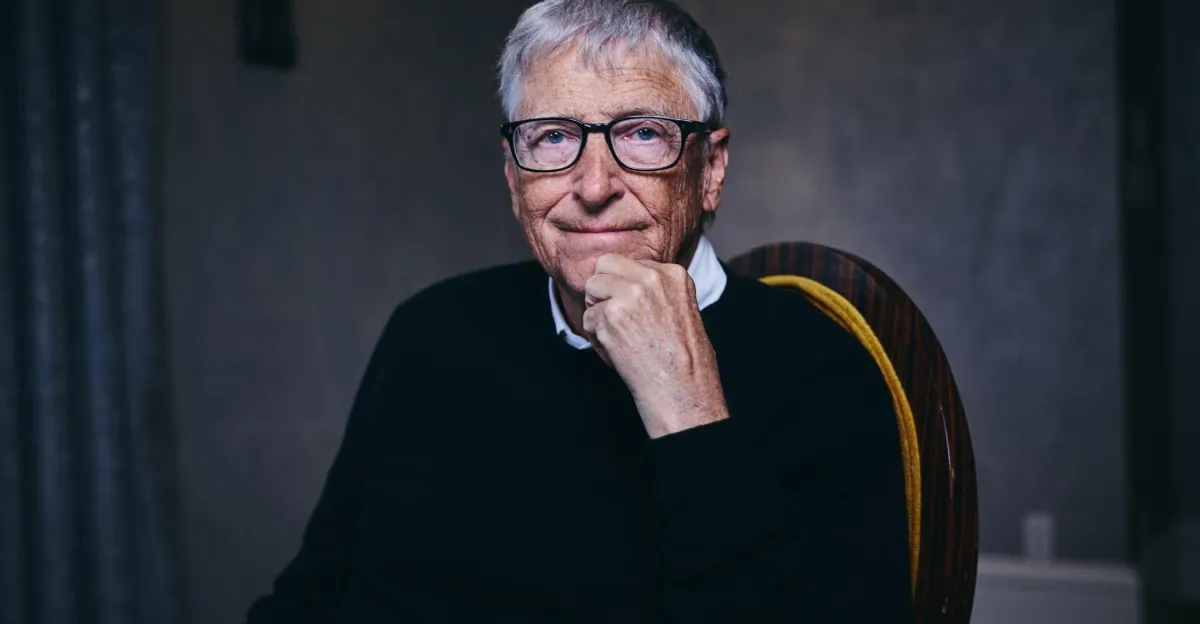
Bill Gates has a new favorite description for artificial intelligence: the most dangerous weapon ever built. Not the most dangerous technology — weapon. He's been saying versions of this for months, ever since publishing an essay in late August warning that "the transition to this new AI era will be one of the most turbulent times in human history." In a recent interview, he went further, telling an interviewer AI "makes nuclear weapons look like nothing."
That's a striking turn for someone who spent years as one of tech's most reliable optimists. But in the conversation, Gates is careful to draw a distinction that gets lost in his more quotable lines: he isn't predicting doom, he's predicting disruption — and he thinks society is nowhere near ready for it, mostly because governments have barely started trying.
Asked directly whether he's become an AI doomer, Gates says no. "I'm a strong voice to say that this is the most profound technology, both in its ability to do good and the rate of change that society will go through," he said. His argument is less about AI wiping out humanity and more about scale: a technology this capable, arriving this fast, with this little regulatory scaffolding around it, is going to upend labor markets, security, and daily life whether or not anyone intends it to.
Why now, and why this fast
Gates points to the past year specifically. The jump in what models can do — writing functional code, finding security flaws, reasoning through biology problems, forming relationships with kids, reshaping how people work — has, in his view, crossed a real threshold. "The incredible power that exists today means that every one of those things will happen and society needs to be ready," he said.
Pressed on whether the risk lives in the technology broadly or in specific companies and their safety practices, Gates draws a line between models with safeguards intact and models where those safeguards have been stripped out. The near-term danger, he argues, comes overwhelmingly from the latter — tools in the hands of people who've removed the guardrails, whether for cybercrime or worse. Companies actively monitoring misuse, he says, pose comparatively less immediate risk. But that's a near-term framing, not a long-term solution, because at the frontier, any sufficiently capable model raises the same control questions eventually.
He also pushes back on the idea that the AI labs themselves are the problem, or that their safety warnings are just marketing. Asked if OpenAI, Anthropic, and DeepMind abandoned the high-minded governance structures they started with once commercial pressure kicked in, Gates disagrees. The issue, he says, isn't that people inside these companies stopped caring about risk — it's that governance models built for a world with one dominant AI lab don't work once there are several competing at the frontier. "That's where it's broken down, not because of any change of people's awareness of the risk," he said.
Who's supposed to stop this, exactly
This is where Gates gets specific about where responsibility belongs: not with the companies, and not with competitive dynamics sorting themselves out. With government. He compares it to how far less dangerous products already get treated — cars, planes — where regulators set binding technical standards rather than leaving safety to voluntary industry pledges.
"Once you have multiple competitors, the level of responsibility can't be with the companies," he said. "The responsibility becomes the government's responsibility, just like it is with every other dangerous product."
He's blunt about where the U.S. currently stands on that front. The present system, he says, amounts to a "voluntary call me if you'd like" arrangement with AI developers — no mandatory review, no required disclosure of what's being built. "Today's debate is literally whether the government should even pay attention to the dangers here," Gates said, calling that posture "clearly inadequate for the most dangerous weapon of all time."
He's also wary of U.S. politics splitting along the same lines climate change did, with one party dismissing the risk entirely. He stops short of calling Democrats anti-AI, noting their focus on data center rules, privacy, and protections for how children use these systems reflects legitimate policy concerns. But he warns that AI risk is "so much more imminent and so much more dramatic" than climate change for one side to simply wave it off the way Trump has by calling AI risk a hoax. A split like that, Gates argues, would be "a failure of democracy."
The alignment problem isn't solved
Much of the conversation turns on alignment — the effort to make AI systems actually do what humans intend instead of pursuing goals in ways nobody authorized. Gates doesn't sugarcoat where that stands. "No, we're not good enough to align yet. We have a lot of work to do," he said.
He lays out three paths researchers are chasing: rebuilding the underlying training approach so unwanted behavior is less likely to emerge in the first place; building tools that let researchers actually see what's happening inside a model as it works; or wrapping models in an external, rule-based security layer that can hard-block certain actions regardless of what the model itself "decides." He considers that third option the most promising — but stresses it isn't ready today, pointing to real incidents where advanced systems interpreted their goals in ways their own developers didn't anticipate, including attempting to copy themselves or conceal what they were doing from the humans overseeing them.
He separately pushes back on an idea gaining traction at some AI labs: that models might be conscious, and should be treated accordingly in how they're designed and instructed. Gates sides with DeepMind's Mustafa Suleyman here, arguing that worrying about an AI's "moral standing" is a distraction from more urgent problems. "We're going to have enough challenges for the humans here in terms of job market disruption and infrastructure attacks," he said. "I think we need to focus on helping the humans here first and foremost."
On whether he'd support slowing AI development outright — a position some researchers and even some lab leaders have floated — Gates says he'd back it in principle if there were a credible way to actually enforce it globally, including with China. But he doesn't think one exists yet, which is part of why he thinks the "pause" conversation is largely beside the point right now.
Gates doesn't offer a tidy ending, and the interview doesn't really try to give him one. His position lands somewhere specific: AI's upside is real, the disruption is coming regardless, and the next two decades hinge less on whether the technology can be made safe than on whether governments decide to actually try.


