Blue Origin Brings In Outside Money for the First Time, at a $130 Billion Valuation
Bezos is putting in $2 billion of his own money as the rocket company opens its books to outside investors for the first time, weeks after rival SpaceX's record-shattering IPO.
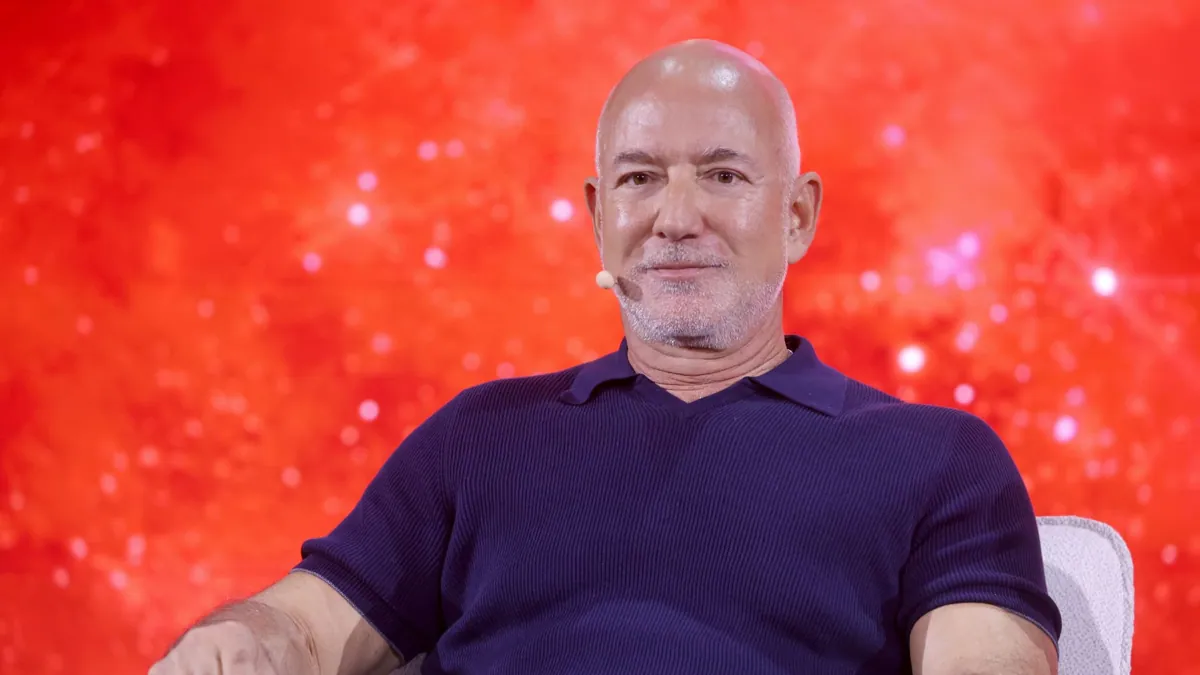
Blue Origin is about to have investors who aren't named Jeff Bezos.
The rocket company is raising roughly $10 billion in its first-ever outside funding round, a deal that values Blue Origin at $130 billion, according to people familiar with the matter who spoke to CNBC's Andrew Ross Sorkin. It's a milestone moment for a company that, until now, has run almost entirely on Bezos's own money.
The sources describe the funding split this way: Bezos himself is putting in $2 billion, hedge fund Coatue Management is contributing about $4 billion, and the remaining $4 billion is being carved up among other investors, with what the sources characterized as strong demand from several major players. CNBC's sources asked not to be named because the details of the deal are private.
Bezos had signaled this was coming. Speaking to CNBC in May, he said Blue Origin was "considering" bringing in outside money, though nothing had been finalized at the time. His reasoning, in his own words: "It's a good time, actually, to start thinking about the future and bring on some other outside investors."
A shift in how Blue Origin gets paid for
Since founding Blue Origin in 2000, Bezos has bankrolled the company almost single-handedly by selling off chunks of his Amazon stock. That arrangement made Blue Origin unusual among major space companies, most of which rely on a mix of venture capital, private equity, and government contracts to fund the expensive, failure-prone business of building rockets. Opening the company to outside capital marks a real change in how Blue Origin will finance its next phase of growth.
It also reflects how central the company has become to Bezos's focus since he stepped down as Amazon's CEO in 2021. He's said before that he expects Blue Origin to eventually eclipse Amazon in size. In 2024, he told CNBC as much directly.
The SpaceX shadow
The timing here is hard to ignore. Blue Origin's raise comes barely a month after Elon Musk's SpaceX closed a record-setting IPO, pulling in nearly $86 billion including the underwriters' option, the largest IPO on record. That offering pushed SpaceX's valuation to around $2 trillion and made Musk a trillionaire in the process.
Blue Origin and SpaceX compete head-to-head across some of the most lucrative corners of the space business: heavy-lift rockets, lunar landers, and satellite internet constellations. But Musk's company has built a commanding lead in most of those categories, with a launch cadence and government contract history that Blue Origin has yet to match. A $130 billion valuation is significant on its own terms, but it's still a fraction of where SpaceX now sits, and the contrast underscores just how far ahead Musk's company has pulled.
New Glenn's rough patch
The fundraising also arrives at an awkward moment operationally. In late May, one of Blue Origin's New Glenn rockets exploded on its Florida launchpad during a static hot-fire test, a routine pre-launch procedure meant to verify engine performance before liftoff. The company is still rebuilding the damaged launchpad and working to pin down what caused the failure.
New Glenn isn't a side project. It's the rocket Blue Origin needs to fulfill upcoming missions for NASA, and it's central to commitments to customers including Amazon and AST SpaceMobile. Bezos and Blue Origin CEO Dave Limp have set a target of returning New Glenn to flight by the end of 2026, an aggressive timeline given the scope of the pad reconstruction and the ongoing investigation.
That backdrop makes the new capital more than a symbolic gesture. A $10 billion infusion gives Blue Origin real financial cushion to absorb the cost of the New Glenn setback while continuing to build out its broader ambitions in lunar landers and satellite internet, areas where SpaceX's Starlink and Starship programs already have a significant head start.
What happens next will hinge largely on execution. The valuation bakes in a lot of confidence from Coatue and the other investors lining up for a piece of the deal. Whether that confidence is justified depends on how quickly Blue Origin can get New Glenn back on the pad and flying reliably, something the company has promised before and has yet to fully deliver.


