Bessent Threatens China With Sanctions Over AI "Theft" Claims
The Treasury Secretary says Chinese models bear "watermarks" of American AI, setting up a tense round of bilateral talks in September.
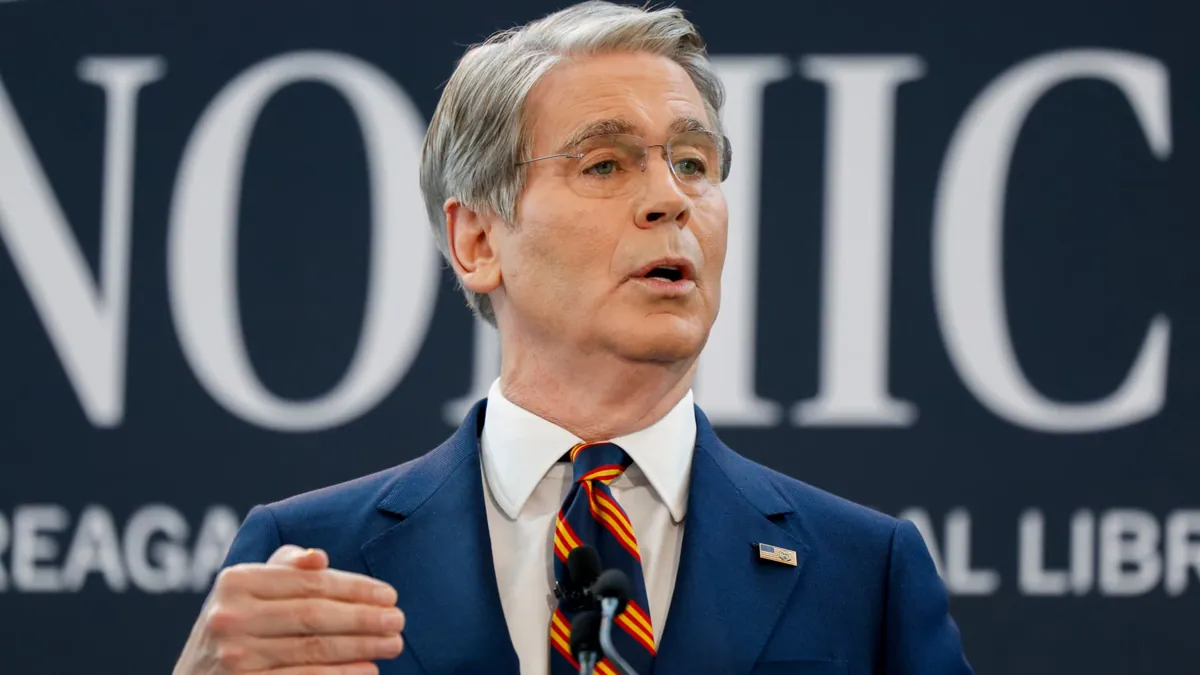
U.S. Treasury Secretary Scott Bessent said Tuesday that the Trump administration is prepared to sanction Chinese companies if it determines they built their AI models by copying American ones, ratcheting up tension over a technique called distillation just weeks before the two countries are set to meet for talks on AI.
"If we see, especially that overseas models are stealing from our great companies, we have the ability to sanction them because of this theft," Bessent told Fox Business.
The comments land at a pointed moment. Chinese open-weight AI models, systems whose underlying parameters are published for anyone to download and build on, have been closing the gap with top American systems from companies like OpenAI and Anthropic, and in some cases surpassing them. Moonshot AI, a Chinese startup, released a model called Kimi K3 earlier this month that beat those U.S. companies' offerings on several industry benchmarks. That kind of result has rattled tech executives and government officials who had assumed the U.S. held a comfortable lead in the AI race.
Bessent's specific accusation centers on distillation, a real and widely used training method in which a smaller, cheaper model learns by studying the outputs of a larger, more capable one. Distillation itself isn't inherently improper. Companies distill their own models all the time to make lighter, faster versions. The problem, in Bessent's framing, is when a company distills a rival's proprietary model without permission, effectively riding on the back of research and compute spending it didn't pay for.
"We are finding watermarks of our U.S. large language models on many of the Chinese models, and that's unacceptable," Bessent said. He added that Treasury will be examining the issue "in the coming days or weeks."
Anthropic's accusation against Alibaba
Bessent's remarks echo a complaint Anthropic raised with lawmakers last month. In a letter to the Senate Committee on Banking, Housing, and Urban Affairs, Anthropic alleged that Chinese tech giant Alibaba carried out what it called the largest known distillation attack against it to date. The letter didn't surface in isolation. It's part of a broader pattern of U.S. AI companies and officials warning that Chinese firms are catching up not purely through independent innovation, but by extracting the value baked into American models through their outputs.
That's a hard thing to prove definitively from the outside. Distillation, by nature, leaves traces in how a model behaves rather than an obvious paper trail, which is why Bessent's language about finding "watermarks" is notable. It suggests U.S. officials believe they have identifiable evidence, though he didn't detail what that evidence is or which specific Chinese models it applies to.
Why this is different from tariff-era sanctions talk
Sanctions have already been a central tool in the U.S.-China tech rivalry, largely aimed at restricting China's access to advanced chips needed to train frontier AI systems. What Bessent is describing is a different front: rather than blocking inputs into Chinese AI development, this would be punishing companies for allegedly extracting outputs from American models. If Treasury follows through, it would mark one of the first times the U.S. has explicitly tied sanctions to intellectual property theft in AI model training rather than hardware export controls.
That distinction matters because it targets the exact dynamic that has Silicon Valley on edge: American labs have spent billions building frontier models, and if a Chinese competitor can approximate that capability cheaply by training off the original's outputs, the economics of being first mover start to look a lot less favorable.
The September talks
The timing adds another layer. According to a Reuters report cited alongside Bessent's comments, the U.S. and China are planning to hold talks specifically on AI in September, with Bessent representing the U.S. side. That puts him in the position of publicly threatening sanctions over alleged IP theft just months before sitting across the table from Chinese counterparts on the same subject.
Whether Bessent's comments are a genuine preview of imminent Treasury action or a negotiating position ahead of those talks isn't clear from what he's said so far. What is clear is that the U.S. government now sees Chinese AI progress, exemplified by models like Kimi K3, as enough of a threat to its competitive position that it's willing to invoke the language of theft and sanctions rather than treat the gap as simply a matter of engineering catch-up.
The coming weeks should show whether Treasury turns this rhetoric into a formal investigation or specific enforcement action, and whether that action lands before or collides with September's talks.


