Apple Can't Say When iPhone Duo Supply Will Catch Up to Demand
CEO John Ternus points to memory chip costs he calls "unprecedented" as the foldable's waitlist stretches into 2027.
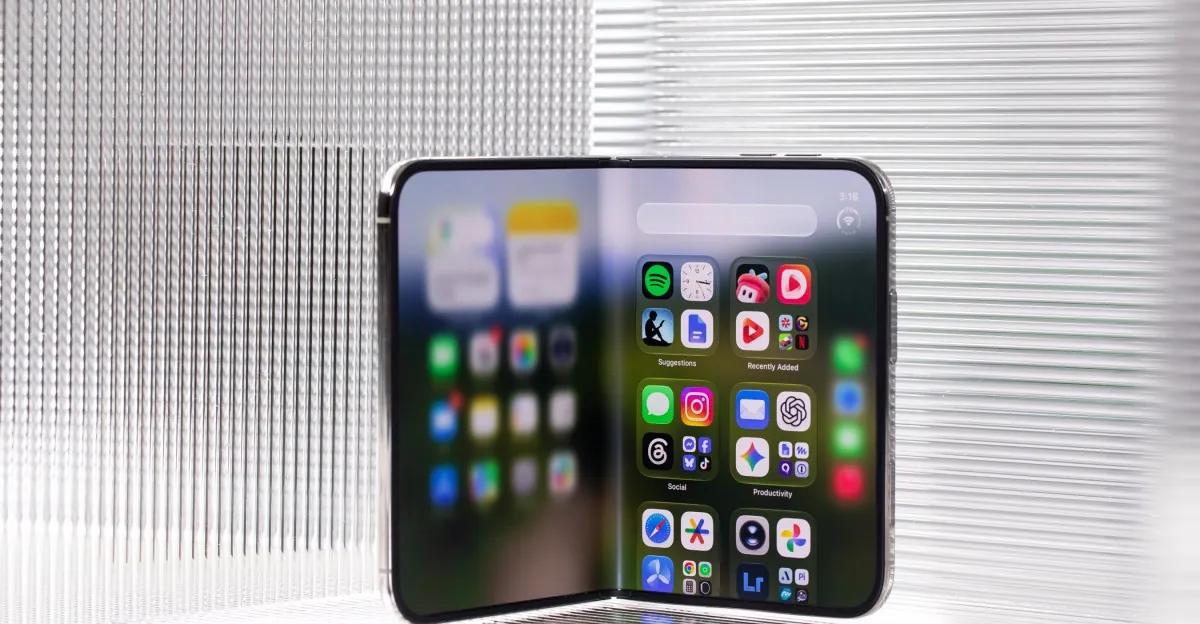
Apple doesn't know when it will have enough iPhone Duo units to meet demand, and the company's leadership isn't pretending otherwise. In an interview with Reuters, CEO John Ternus said Apple is "working hard to get it to as many customers as quickly as possible, but at this point, we're not able to predict when supply and demand will be in balance."
That's a notably blunt admission for a company that typically treats supply chain logistics as a closely guarded secret. It also underscores just how lopsided the launch of Apple's first foldable phone has been.
The iPhone Duo debuted last month at $1,999, built around a 5.4-inch outer display and a 7.6-inch inner screen that unfolds into a tablet-sized surface. Preorders disappeared almost immediately, and some customers who ordered are now looking at shipment windows stretching into 2027. Apple also stocked a limited number of units in physical stores for walk-in buyers at launch, but that clearly wasn't enough to keep up with interest.
Ternus also addressed another thread that's been circulating since launch: reports of cracked screens on the device. He said only "a very small percentage" of iPhone Duo units have come back for that reason, and that Apple is replacing the affected phones. It's a limited acknowledgment, but a notable one, since foldables as a category have long carried a reputation for fragile hinges and screens, and this is Apple's first real test of that durability question at scale.
The memory squeeze behind it all
The supply crunch isn't unique to the Duo. Apple has spent months dealing with broader supply chain pressure and climbing memory chip costs, a squeeze that's rippled across its entire product lineup. It's part of why the iPhone 18 Pro and Pro Max launched at higher starting prices than their predecessors.
Ternus put a number-free but pointed description on the problem during Apple's Q4 2026 earnings call on Monday: "What we're seeing with memory pricing right now is unprecedented." He added that Apple expects memory costs to climb even further during the December quarter, though he said the hit will be "partly offset" by the price increases Apple has already made.
Memory pricing has been a persistent headache across the consumer electronics industry, and Apple buys components in volumes few companies can match, which normally gives it leverage to smooth out price swings. Ternus's comments suggest that even Apple's scale isn't fully insulating it this time.
Strong results despite the gap
The financial picture, at least, looks fine from the outside. Apple reported record iPhone revenue of $57.58 billion for the quarter, a notable figure given that the lineup didn't even include a standard iPhone 18 model this cycle. That revenue strength suggests the Duo shortage and broader memory cost pressures haven't dented Apple's bottom line, at least not yet, even if they're creating real friction for customers trying to actually get their hands on the new foldable.
The gap between those two realities, strong revenue on one side and an unpredictable supply timeline on the other, is the real story here. Apple built a premium foldable, priced it like a flagship-plus device, and found demand that it apparently didn't fully anticipate or couldn't fully supply against. Combine that with memory costs rising industry-wide, and you get a company that's making more money than ever while openly admitting it can't tell its own customers when they'll get the product they already paid for.
For now, anyone who hasn't preordered an iPhone Duo is looking at a wait with no clear end date, and anyone who has might be looking at 2027. Whether that changes depends largely on forces outside Apple's control: how fast memory prices settle, and whether component supply can scale to match a demand curve the company itself says it never saw coming.