Anthropic's CEO Pushes Back on Claims He Wants Open-Weight AI Banned
Dario Amodei says his real worry isn't open models themselves, but authoritarian governments — especially China's — building AI systems more powerful than anything in the West.
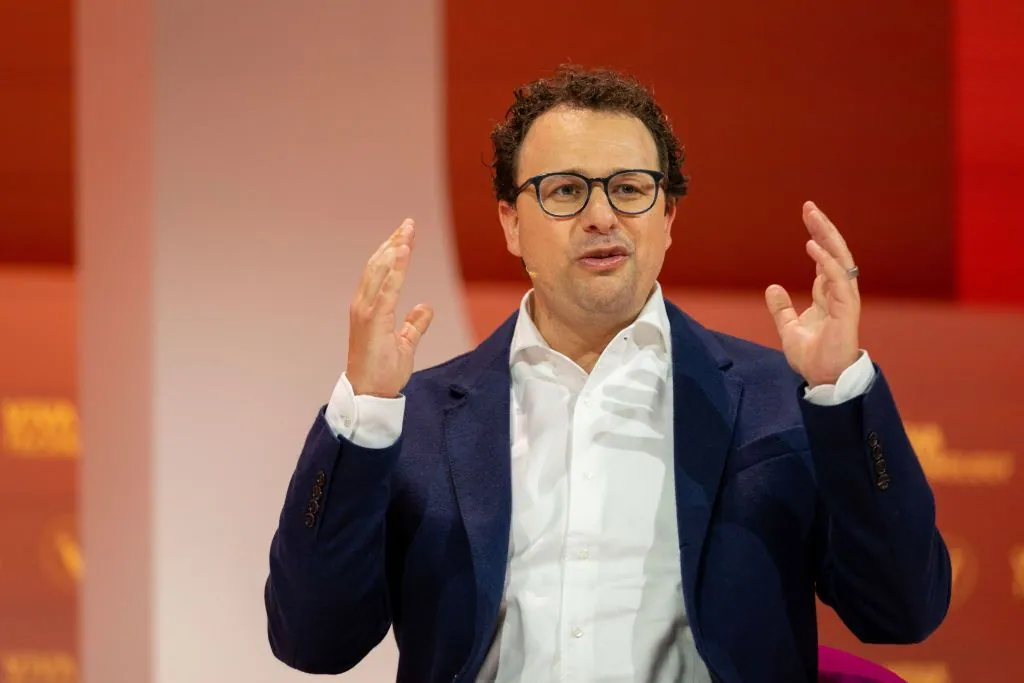
Dario Amodei spent Monday afternoon trying to shut down a narrative he says has gotten away from him.
In a blog post, the Anthropic founder and CEO directly denied that his company has ever pushed for a government ban on open-weight AI models — the kind of systems whose underlying parameters are published publicly so anyone can download, modify, and run them. "Anyone who has read my past writing should know that I don't regard such bans as a useful measure, but let me state it clearly so that there is no doubt: Anthropic has never advocated for a ban on open-weights models," he wrote, italics his.
The statement was a direct response to a growing rift in the AI industry over how Washington should treat open-weight models, particularly ones coming out of China. That rift became public on Friday, when Nvidia founder and CEO Jensen Huang made his first-ever post on X to share an open letter signed by Nvidia, Hugging Face, Meta, Microsoft, Mistral, and other companies. The letter didn't call out any specific rival, but it urged policymakers to avoid imposing broad "premature restrictions" on open-weight AI.
The subtext was hard to miss. The industry has been arguing for months over claims that Chinese AI labs are catching up to their American counterparts partly by lifting their work outright — including through a technique called distillation, where one model is bombarded with prompts from another so it can effectively learn to mimic it. That controversy has put open-weight advocates and China hawks on a collision course, and apparently put Anthropic in the crosshairs of industry gossip suggesting it quietly favors restricting open models altogether.
Amodei's post draws a sharp line between two things he says are getting conflated: open-weight models generally, and the specific threat posed by authoritarian states building the most powerful AI systems in the world. On the first point, he's unambiguous. "Open-weights models that don't have dangerous capabilities are a public good," he wrote, arguing they cost nothing beyond the compute to run them and provide real value to businesses, developers, and researchers.
Where his fear actually lives
The threat Amodei describes isn't businesses adopting open models, even ones built in China. It's what happens if an authoritarian government builds an AI system substantially more capable than anything in the U.S. He frames the risk in stark terms: a government using that advantage to lock in what he calls "permanent military superiority," or to more effectively repress its own population.
He's careful to note the Chinese Communist Party isn't the only government he has in mind. But he calls it the "most capable" authoritarian actor currently in the race, which is why so much of the conversation gravitates toward China specifically.
Amodei also broadens his list of worries beyond the usual cybersecurity concerns that dominate AI-safety debates. He says he's specifically concerned about AI enabling biological attacks. And this is where his objection to open-weight models sharpens: he argues that once a model's weights are public, it becomes far harder to apply safety guardrails or monitor how the model is actually being used in the wild. He points to a report from the UK AI Security Institute to back a related point — once weights are released into the world, they can't be pulled back. There's no recall.
That view runs directly against a core argument from open-source AI advocates, who contend that widely available, powerful models actually make everyone safer, because defenders can inspect, adapt, and build protections using the same tools attackers might use. Amodei's post doesn't try to referee that broader debate; he's simply explaining why he thinks the China-linked risk deserves separate treatment from the general question of whether open models should exist.
What he actually wants done
Rather than a ban, Amodei lays out a more targeted wish list. Restricting China's access to advanced chips tops it — a policy the U.S. government has already pursued for years. He also wants a formal crackdown specifically targeting distillation, the technique labs allegedly use to reverse-engineer rival models through mass prompting. That lines up with an existing U.S. posture: Washington has already floated sanctions against China over allegations of intellectual property theft tied to American AI models.
The more notable part of his post might be where he sounds almost optimistic. Amodei says he supports building out a global model safety testing organization, one that all major AI powers, including China, would have to submit to. He suggests the idea is closer to broad agreement than people might assume, and credits the Trump administration with moving toward it in recent months.
"Note that to be effective, testing would need to be global, which means even the CCP would need to be on board," he wrote, adding that he thinks "limited cooperation around preventing AI biological weapons may be possible because it is in China's interest too."
That's a striking bit of common ground to stake out in the middle of an otherwise adversarial framing — Amodei spends most of the post warning about an authoritarian AI arms race, then closes by suggesting the very governments he's worried about might actually sign onto shared safety rules. Whether that kind of cooperation is realistic, given the chip restrictions and IP disputes already straining the U.S.-China AI relationship, is the open question hanging over his post. For now, Amodei's immediate goal seems narrower: making clear that Anthropic isn't the company quietly lobbying to kill open-weight AI, even as it keeps pressing Washington to treat China's ambitions as a distinct and more serious problem.


