Google Messages Will Use Cloud AI to Catch Scammers Mid-Conversation
An opt-in "enhanced protection" mode sends suspicious exchanges to Gemini for analysis, part of a wider set of anti-fraud tools rolling out across Android.
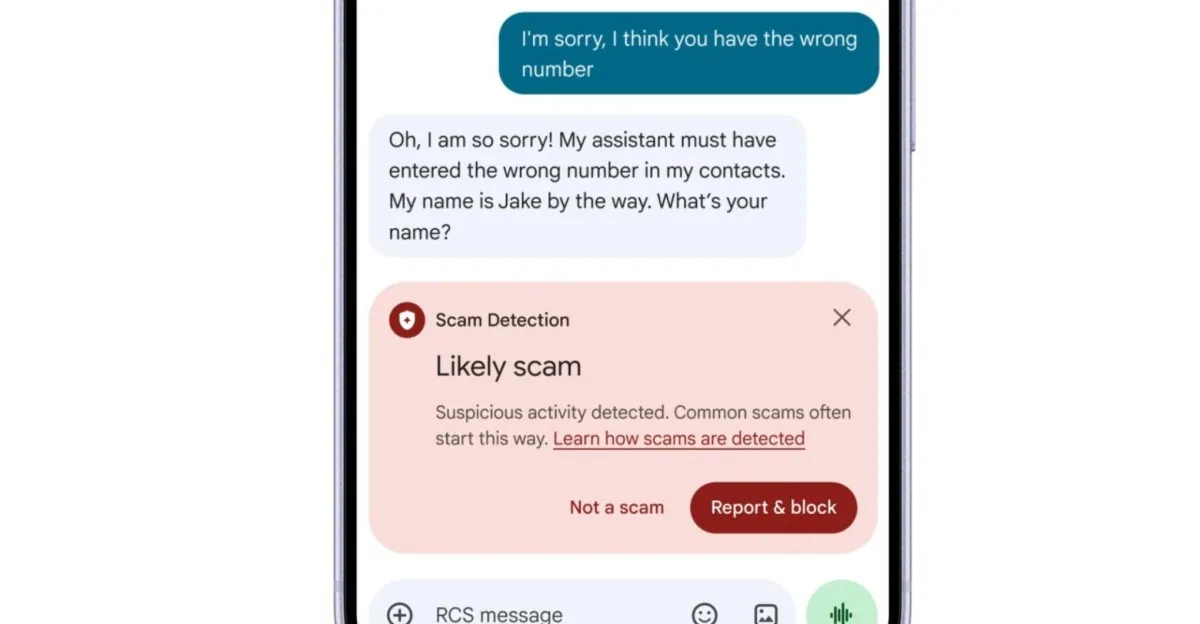
Google is giving Google Messages a new way to spot scammers: letting its Gemini AI models read your conversations with strangers and decide whether something feels off. The feature, called "enhanced protection," is opt-in and starts rolling out in the coming weeks, according to Google's own announcement. It's the centerpiece of a broader batch of anti-fraud updates the company unveiled for Android, which also touches call forwarding and screen sharing.
Google Messages already has a Scam Detection feature that works on-device, scanning texts for telltale signs of fraud without sending anything off your phone. The new enhanced mode goes further by tapping cloud-based Gemini models to evaluate conversations with senders you don't recognize, specifically looking for patterns that unfold over time rather than a single red-flag message.
That distinction matters because of how modern scams actually work. Fraudsters rarely announce themselves. They build rapport first, sometimes over days, before pivoting into a request for money or personal information. Google described this directly in its announcement: "Scammers often disguise their true motives behind slow-burn conversations." The company says the cloud analysis is meant to "actively uncover and stop abusers who try to hide their tracks," catching schemes that a purely on-device scan might miss because no individual message looks suspicious in isolation.
How the analysis stays private
Sending text conversations to the cloud for AI review raises an obvious question: who gets to see them? Google says the data is encrypted during analysis and handled in what it calls a "secure dedicated space" that neither Google nor anyone else can access besides the user. Whether that reassurance is enough to get people to actually flip the setting on is a separate question, which is likely why Google built it as opt-in rather than something that happens automatically.
The enhanced mode isn't limited to conversation analysis. It also uses Gemini Nano, a smaller AI model that runs locally on the device, to check unfamiliar URLs sent in a text against real-time web signals before the user taps the link. That check happens on-device, so it doesn't carry the same cloud-privacy tradeoff as the conversation analysis, and it's designed to flag malicious links before someone clicks through to a phishing page.
Plugging other scam pathways
The rest of the announcement addresses fraud tactics that don't involve text messages at all. Google is adding a safeguard that blocks apps from silently enabling call forwarding on a device, a technique scammers use to reroute a victim's calls (including bank verification calls) to themselves. Users will now get notified if an app attempts to turn call forwarding on.
Google is also addressing a scam pattern built around screen sharing, where a scammer talks a victim into sharing their screen and then watches for banking apps, passwords, or other sensitive data in real time, often under the guise of tech support. Chrome and Android WebView will now automatically hide sensitive information while a screen is being shared, cutting off that avenue without requiring the user to remember to close anything manually.
Taken together, the updates cover three distinct scam vectors: the slow-build text conversation, the hijacked call, and the screen-share scam that relies on a victim's willingness to cooperate. That spread suggests Google is treating scam defense less as a single feature and more as a layered system, with AI doing the work in two different ways, cloud-based for conversation nuance, on-device for speed and privacy on link and call-level checks.
The chat-notification version of scam detection, which Google first brought to Pixel phones last year, is also expanding well beyond Google's own hardware. It's now rolling out to devices from Honor, Motorola, Oppo, OnePlus, Realme, Tecno, Vivo, and Xiaomi, among others. Google says it intends to bring the feature to "hundreds of millions of additional users later this year," turning what started as a Pixel-exclusive protection into something closer to an Android-wide standard.
For now, the enhanced protection mode is arriving gradually and only for users who choose to turn it on. How quickly people opt in may depend less on the technology itself than on how comfortable they feel with Gemini reading their text threads, even under Google's encryption promises. But as scam tactics keep getting more patient and more convincing, Google is betting that AI built to notice a slow con is worth the tradeoff.


