Amazon's Earnings Will Reveal How Much AI Is Costing the Everything Store
Thursday's report lands as the company sits on sold-out cloud capacity, negative cash flow, and a widening fight over who gets to shop on its site with AI agents.
Amazon reports third-quarter earnings after the bell Thursday, and the headline numbers are almost beside the point. Analysts polled by LSEG expect adjusted earnings of $1.96 per share on revenue of $202.31 billion. StreetAccount projects Amazon Web Services revenue of $45.48 billion and advertising revenue of $20.82 billion. Those figures matter, but the real story this quarter is what Amazon is spending to stay ahead in AI, and what that spending is costing it everywhere else.
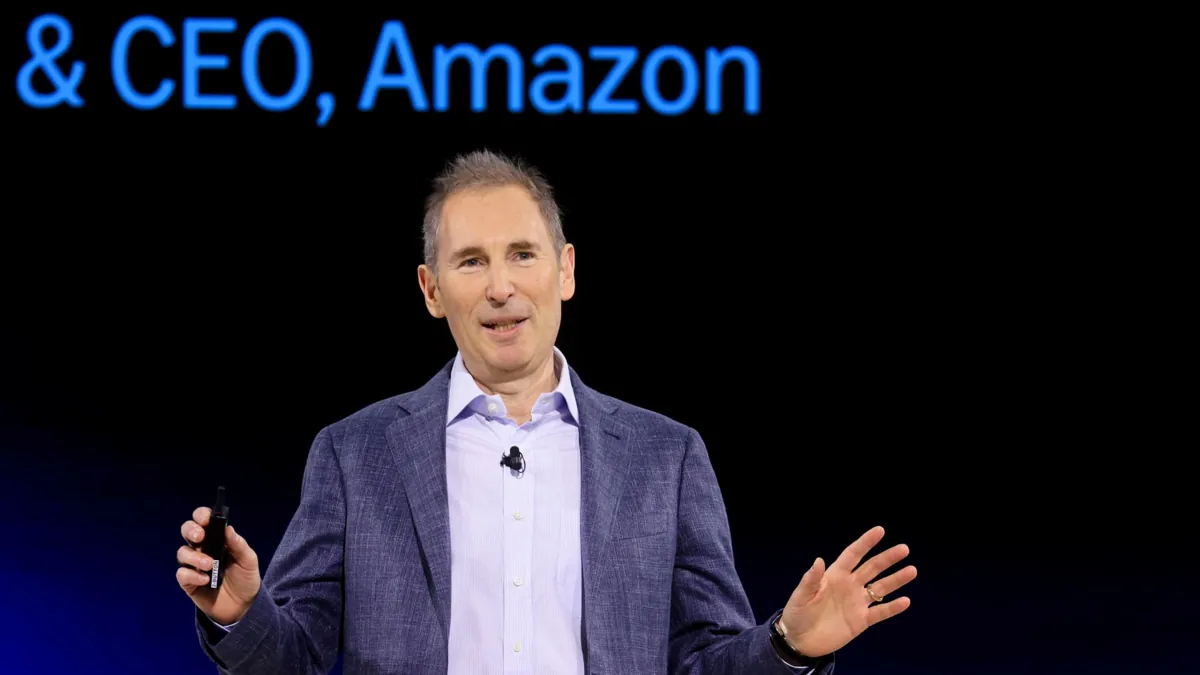
Start with the cloud business, because it's the clearest sign of how much demand Amazon is chasing. StreetAccount expects AWS sales to grow 38%, up from 37% last quarter, which would mark the unit's fifth straight quarter of accelerating growth. CEO Andy Jassy said on an Andreessen Horowitz podcast last week that Amazon's cloud capacity is "largely sold out" for next year, with meaningful commitments already locked in for 2028.
"We always leave a certain amount for on demand and our inference service Bedrock or EC2, but largely sold out all the big chunks," Jassy said. "A good chunk of '28 is sold out."
That's a striking admission for a company of Amazon's scale. It means demand for AI infrastructure isn't just strong, it's outrunning supply more than a year out. But sold-out capacity has a price, and investors will be parsing every word Amazon executives say about capital expenditure on the earnings call.
The spending keeps climbing
Last quarter, Amazon raised its 2026 capex forecast to $220 billion, up from an earlier $200 billion estimate. Analysts surveyed by StreetAccount now expect that figure to climb past $280 billion in 2027. Amazon has been racing to bring new data centers online to keep pace with AI compute demand, and the bill is showing up in its cash flow. In July, the company reported negative free cash flow of $7.6 billion over the trailing twelve months, a sharp reversal from positive free cash flow of $18.2 billion a year earlier. FactSet estimates point to another cash flow shortfall this quarter, projecting an outflow of $9.9 billion.
Amazon isn't alone. Alphabet and Meta both posted negative free cash flow in their most recent quarters as they pour money into AI infrastructure. Microsoft, by contrast, said Wednesday that its free cash flow fell 27% in its fiscal first quarter but stayed positive, making it the outlier among the major cloud players.
Even as Amazon spends aggressively on AI, it's been pulling back on people. The company has cut more than 57,000 corporate jobs since 2022, about 16% of its corporate workforce, through a steady drip of smaller layoffs rather than one dramatic round. The pattern continued this week: Amazon confirmed to CNBC that it laid off some staff on its device software and services team, saying the move would help it "operate more efficiently and better align with our product roadmap." Fewer than 250 employees were affected.
A turf war over who gets to shop with AI
The quarter also brought a more public fight over how AI agents interact with Amazon's marketplace. Amazon blocked Meta's Muse AI shopping agent from operating on its site, saying it had received no advance notice that Muse intended to access its storefront and had never agreed to let it in. That's consistent with how Amazon has treated other outside agents: it has blocked dozens of them, including Perplexity, which Amazon sued last year over claims the startup hid the fact that its shopping tools were AI bots rather than human users.
The logic behind locking the gate is straightforward. Amazon makes a lot of money from sponsored ads that appear when people browse and search its site. If shoppers start outsourcing that browsing to AI agents from Meta, OpenAI, or anyone else, those agents can skip right past the ads Amazon depends on. That's a real threat to a business that StreetAccount estimates brought in nearly $21 billion in revenue just last quarter.
Amazon's answer has been to build its own version of that experience rather than let someone else run it. In May, the company rebranded its Rufus shopping chatbot as Alexa for Shopping. On Thursday, Amazon said more than 400 million shoppers have used the assistant, and usage of its agentic features, the ones that take actions rather than just answer questions, has grown more than eightfold since the start of the year. The tool now handles over 100 shopping-related tasks, according to the company, including building gift lists, managing subscriptions, and making account changes.
Deutsche Bank analysts flagged the tension in a note last week, writing that Amazon is well-positioned to build its own agentic shopping product given its purchase data and existing commerce infrastructure. But they framed the real question as whether Amazon can let third-party agents operate on its platform at all without undercutting the ad revenue that currently keeps those purchases profitable for the company.
That's the backdrop Amazon walks into Thursday's report with: a cloud business that can't build capacity fast enough, a spending plan that's draining cash the way it has for its biggest rivals, a workforce that keeps shrinking even as AI investment grows, and a fight over who controls the moment a customer decides to buy something. The earnings numbers will tell part of that story. What Jassy and his team say about 2027 capex, AWS bookings, and how Amazon plans to handle outside AI agents will tell the rest.


