Amazon Collected $600 Million in Tariff Refunds. It'll Pass Some Back to Shoppers.
The company's cautious rollout of refunds comes after months of pressure from a consumer lawsuit and from Trump himself.
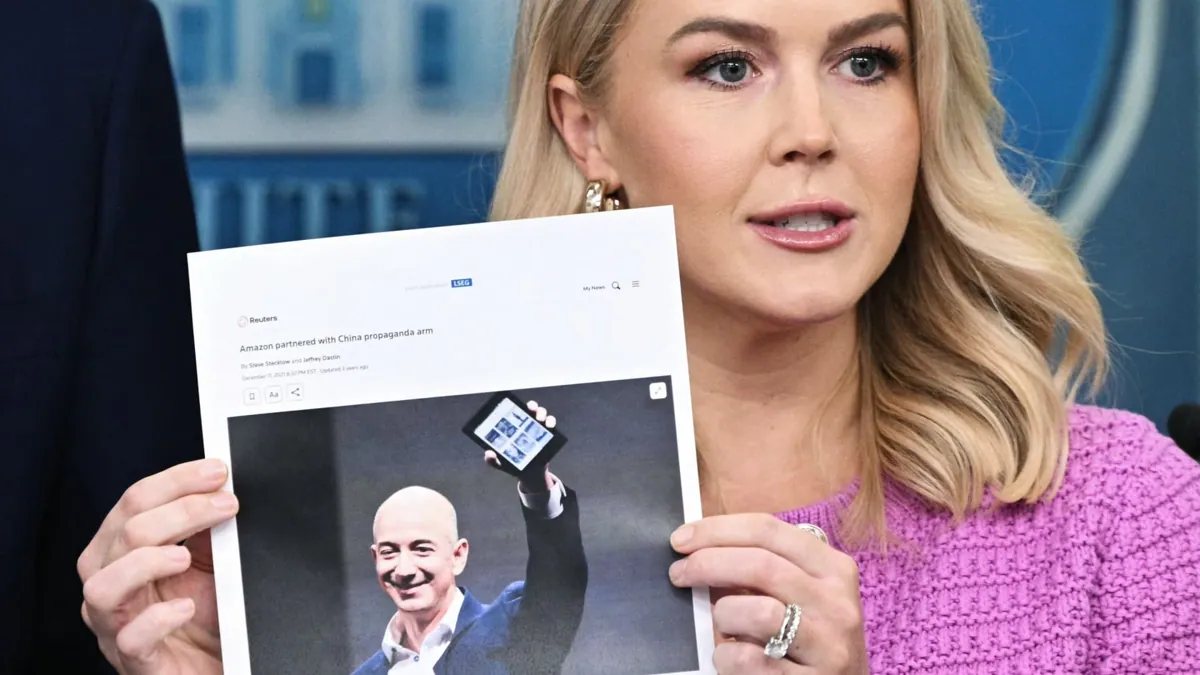
Amazon told investors Thursday that it has already pocketed $600 million from the federal government after the Supreme Court struck down a chunk of President Donald Trump's tariffs earlier this year, and said a portion of that money will flow back to customers who paid inflated prices.
"We are participating in the tariff refund process and, as I mentioned earlier, we received approximately $600 million in Q2," Amazon finance chief Brian Olsavsky said on the company's earnings call, according to CNBC.
The refund stems from a February Supreme Court decision that invalidated many of the tariffs Trump had imposed under the International Emergency Economic Powers Act, a 1977 law. That ruling forced the government to start repaying companies for duties collected on tariffed imports, and it set off a wave of refund applications from some of the country's largest retailers and manufacturers, including Walmart, Costco, Home Depot, Apple and General Motors. Apple said Thursday that tariff refunds lifted its third-quarter earnings per share by 5%, or 11 cents.
A reluctant participant, at least on paper
Amazon's situation stands out because the company had never publicly confirmed it would even seek a refund, leaving the impression — fairly or not — that it might be sitting the process out. That ambiguity became a legal liability. In May, consumers filed a class-action suit in federal court in Seattle arguing they were owed money back for tariff-inflated prices and accusing Amazon of avoiding the refund process specifically to stay on Trump's good side.
That suspicion wasn't manufactured from nothing. Amazon had already burned through some political capital over tariffs once this year. In April 2025, reports surfaced that the company was considering displaying the cost of Trump's tariffs directly next to affected products on its site, a transparency move that infuriated the White House. According to NBC News, Trump personally called Amazon founder and Executive Chairman Jeff Bezos to complain, and the idea never materialized. Trump later told CNBC in April that he'd "remember" which companies chose not to pursue refunds when given the chance, in response to a question about whether firms like Amazon might be holding off out of fear of angering him.
Against that backdrop, Thursday's disclosure reads less like routine earnings-call detail and more like Amazon clearing the air. The company is, in fact, seeking its money back.
Why Amazon's refund is smaller than it might sound
$600 million is real money, but Olsavsky was careful to frame it as modest relative to Amazon's scale, and to explain why. For one, Amazon had moved to stockpile inventory ahead of the tariffs taking effect, which limited how much tariffed merchandise it actually imported once the duties were in place. For another, and more structurally, Amazon isn't the importer of record for most of what sells on its platform.
That distinction matters. More than 60% of items sold through Amazon's marketplace come from third-party sellers, not Amazon itself. Those sellers, not Amazon, are generally the ones who imported the goods and paid the tariffs directly, which means many of them — not Amazon — are the ones filing for refunds on that merchandise. Olsavsky's comments suggest Amazon's $600 million reflects primarily what the company itself paid in tariffs on goods it imported directly, a relatively narrow slice of everything that moves through its platform.
What customers actually get back
Olsavsky said Amazon will return refund money to shoppers, but only in specific, traceable cases. "We've identified a limited set of circumstances where we can trace that we've passed specific import charges onto customers, and when we receive those refunds, we will proactively contact affected customers and automatically issue refunds to them," he said, according to CNBC.
Outside of those traceable cases, Amazon won't be cutting individual checks. Instead, Olsavsky said the company will do what he described other large retailers doing with their own refunds: funnel the money into keeping overall prices low, rather than unwinding it transaction by transaction.
That's a meaningfully narrower commitment than it might first appear. Most customers who paid more for a given product because of tariffs likely won't get a direct, line-itemed refund tied to their specific purchase. They'll instead be folded into Amazon's broader pricing strategy, with the tariff money treated as working capital rather than a debt owed to any particular shopper.
The bigger picture
Amazon's move lands it alongside Apple, Walmart, Costco, Home Depot and GM in the group of major companies now actively recovering money from a tariff regime the Supreme Court found unlawful. For an administration that has leaned hard on individual companies to fall in line on trade policy, the refund process has become its own kind of pressure test, one where silence or delay can read as political calculation rather than accounting caution.
Amazon spent much of the past year and a half navigating that exact perception problem, from the scrapped tariff-labeling plan to the Seattle lawsuit. Thursday's disclosure doesn't resolve every question, especially for customers wondering if their specific purchase qualifies for a refund, but it does put a number and a policy on the record. The real test now is how many shoppers actually notice the difference, versus how much of that $600 million simply gets absorbed into Amazon's pricing machine.


