Amazon's Devices Chief Says Apps Are a Dead End. Ambient AI Is the Replacement.
Panos Panay used TechCrunch Disrupt to lay out Amazon's bet that wearable sensors and background AI, not app icons, will define the next era of personal computing.
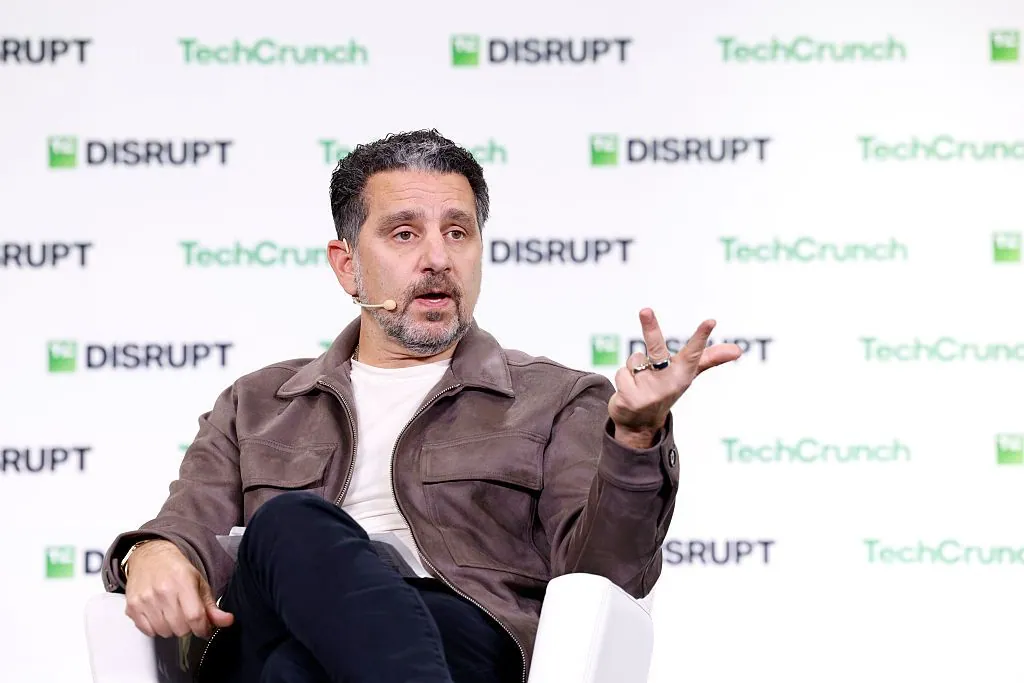
Amazon's top devices executive thinks the app icon is on borrowed time.
Speaking at TechCrunch Disrupt on Thursday, Panos Panay, Amazon's SVP of Devices, Alexa & Leo, argued that the entire model of tapping an app to tell it what you need is about to give way to something quieter: devices that figure out what you need before you ask. The comments came as Amazon unveiled a new line of AI wearables under its Bee brand, giving Panay's vision an actual product to point to.
Panay framed the shift in terms of how much mental effort current devices demand. Using a smartphone, he said, means constantly remembering what you want the tool to do for you. "It's like point, shoot, return," he said at the event. The alternative he's betting on is what he calls ambient devices — hardware that runs in the background, uses sensors and AI to read the situation, and surfaces what's useful without being told to.
"As it works in the background, you're able to stay more present. You're able to get more done. You're about to spend more time with people … you're not afraid if you miss something. It's incredibly powerful," Panay said.
Bee: Amazon's opening move
The clearest expression of that philosophy is Bee, Amazon's newly announced hardware line. It includes a band that can be worn on the wrist or detached and worn as a pendant, plus a credit-card-sized accessory that magnetically clips to the back of a smartphone. The devices passively listen throughout the day and generate notes, surfacing to-dos, reminders, and other details a user might need later.
The privacy mechanics are notable given what these devices are doing: continuously listening to someone's life. According to the reporting, Bee's hardware doesn't store raw audio. Conversations are processed in real time and the audio is deleted immediately after. What's kept are encrypted transcripts, secured with keys generated and controlled by the user's own device — meaning not even Amazon employees can access that data without the user deliberately sharing it.
Panay pointed to that design choice as non-negotiable for this category of product. "You have to give customers that control," he said. "Every product is different, but for Bee specifically, as an example in the ambient space like that, you have to design with privacy in mind. And that's what we do. That's critical."
A career spent on this exact question
Panay isn't a newcomer to betting on what comes after the current computing paradigm. He spent 19 years at Microsoft overseeing Surface, the hardware line that tried to blur the line between tablet and laptop. That background shows in how confidently he talks about where interfaces are heading next.
His bigger claim is that an entire generation of users will stop reaching for apps as the default way to get things done. "Do I think we have a future where there's a bit of a balance — a whole generation that doesn't say 'give me the app' for that, but says it should just understand what I need? Yeah, I do. I think that transformation is coming. I think that is the next generation," he said.
That's a significant statement coming from inside Amazon, a company with obvious incentive to want people spending less time in third-party apps and more time inside its own ecosystem of Alexa, Echo, and now Bee.
Not a phone-killer, exactly
Panay was careful to draw a line between replacing apps and replacing the smartphone itself. He doesn't see ambient devices displacing phones outright, even as Amazon would clearly benefit if tablets or smart speakers took on a bigger share of daily computing. Instead, he described a future where a new class of sensor-driven devices works alongside phones, adding a layer of intelligence that threads through whatever hardware a person happens to be using.
"I'm not a proponent that says one form factor is going to replace another. I don't think that's the case," he said. "I think there's an intelligence layer that connects it all … and it has to be useful."
That framing matters because it's a more modest and more plausible claim than "wearables kill phones." Amazon isn't arguing Bee replaces your smartphone. It's arguing that the interface layer on top of all your devices is about to change shape, and that whichever company controls that ambient layer — the thing quietly listening, remembering, and anticipating — ends up owning the most valuable real estate in personal computing.
Whether Bee is the device that pulls that off remains to be seen. But Panay's comments make clear Amazon isn't treating it as a novelty wearable. It's a first move in a bet that the next generation of users won't open apps at all.


