Microsoft and Google Pull Back AI Spending Plans as GPU Supply Lags Behind Demand
Both tech giants cited delays from outside computing partners, rattling neocloud stocks already under pressure over debt and credit concerns.
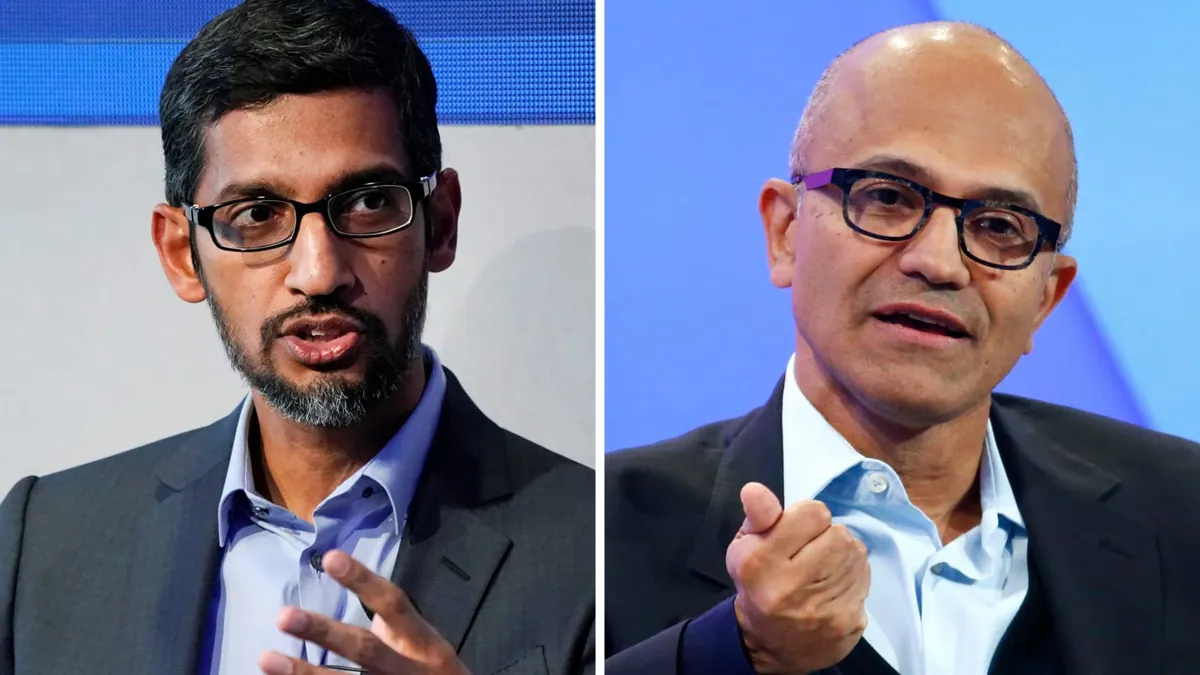
For the first time in several quarters, two of the biggest spenders in the AI boom gave Wall Street a capital expenditure number that came in under expectations rather than over.
Microsoft and Alphabet both reported earnings Wednesday, and both trimmed or held steady on their AI infrastructure spending guidance instead of raising it. Microsoft cut its full-year capex forecast to $170 billion from $175 billion. Alphabet kept its range at $195 billion to $205 billion rather than pushing it higher. Neither move suggests AI spending is slowing down in any real sense, but after a year of hyperscalers continually ratcheting up their build-out plans, even a flat or reduced number was enough to spook investors.
Shares of CoreWeave, Nebius and IREN, three so-called neoclouds that rent out GPU capacity to the likes of Microsoft and Alphabet, all fell on the news. Oracle, one of the largest spenders on AI infrastructure, dropped too.
Supply, not demand, is the problem
The explanation both companies gave points to a bottleneck outside their own control: getting enough graphics processing units from third-party providers.
Microsoft CFO Amy Hood told analysts on the earnings call that delays from outside GPU suppliers will push some available capacity out until the first half of 2027. She didn't name the companies responsible, but Microsoft leans on CoreWeave, IREN and Nebius, among others, to supplement its own data center capacity.
Alphabet's finance chief, Anat Ashkenazi, described a similar dynamic, telling analysts that outside computing power "came online only at the very end of Q3." That timing crunch coincided with a rough quarter for Alphabet more broadly: the company missed on both earnings and revenue, reported negative free cash flow of more than $9 billion, and saw its shares tumble about 10% in extended trading.
Not every investor is rattled. Chris Ballard, managing director of Check Capital Management, told CNBC in an email that his firm is "pleased with what we see and what we heard" and trusts Alphabet's management on its AI spending approach.
A shaky foundation for the neoclouds
The bigger story may be what this reveals about the neocloud sector these hyperscalers increasingly depend on to fill capacity gaps. These companies need enormous amounts of outside capital to keep building data centers, but most don't carry investment-grade credit ratings. As interest rates have risen and worries about their debt loads have grown, lenders have started backing away.
The timing is awkward. Anthropic, which relies on Amazon, Google and Microsoft for much of its computing power along with capacity from SpaceX, Lambda and Nscale, is preparing to go public. Nscale itself filed for an IPO in September but hasn't updated its prospectus in weeks. Anthropic's Claude assistant has gone offline at points this year as demand outpaced available capacity, underscoring how thin the margin for error has become. OpenAI, which has floated a 2027 IPO as likely, faces the same constant scramble for more compute.
Analysts at Gartner told CNBC last week that they expect 80% of neocloud companies to be either absorbed by larger players or shut down entirely by 2030. That forecast landed just weeks after Nvidia-backed neocloud Firmus, based in Australia, pulled its own IPO plans despite having landed large usage commitments from Meta and OpenAI.
Microsoft's delays with its outside GPU partners, then, aren't an isolated hiccup. They're a visible symptom of a financing and supply structure that a growing number of analysts think can't support its current roster of players.
The build-out isn't slowing, just stuttering
None of this points to AI infrastructure spending hitting a ceiling. Hood said she expects capital spending to accelerate again in the first half of 2027, as the delayed GPU deliveries finally arrive alongside rising component costs. Across the industry, hyperscaler capex is projected to top $1 trillion next year, with some estimates showing it climbing further after that.
And investors still rewarded Microsoft for its underlying business, even as they punished the capex miss elsewhere in the sector. The company beat earnings and revenue estimates, powered by 48% sales growth in its Azure cloud division. Cantor analysts led by Thomas Blakey called the quarter "further validation of Microsoft's AI-led growth opportunity" in a note to clients, maintaining a buy rating and lifting their one-year price target to $630 from $608.
Meta, which reported last week, told investors it now expects full-year capex of $135 billion to $145 billion, nudging up the low end of that range from $130 billion. Like Alphabet, Meta also reported negative free cash flow, and its shares fell on the report too.
Amazon rounds out the picture when it reports earnings after the close Thursday, giving investors their last major data point on hyperscaler spending for the quarter. Between GPU supply delays, mounting free cash flow pressure at multiple companies, and a neocloud financing model that analysts increasingly doubt can hold up, this earnings cycle has surfaced real friction points in the AI build-out for the first time in a while. The spending itself isn't stopping. Whether the infrastructure underneath it can keep pace, though, is suddenly a live question.


